English edition of a Japanese guide by Hiroshi Yagi. Japanese original: first published January 16, 2026; updated October 7, 2026. Read the Japanese original (Japanese).
When choosing incontinence insert pads, check the absorbency and shape against urine volume, and how the pad is combined with underwear or adult diapers. Main shapes include rectangular pads, contoured pads and pads for men. This illustrated guide explains their features, measuring urine volume, using standing leak guards and precautions when layering pads.
Incontinence insert pads
Types
There are various types, including rectangular pads, contoured pads and pads for men.
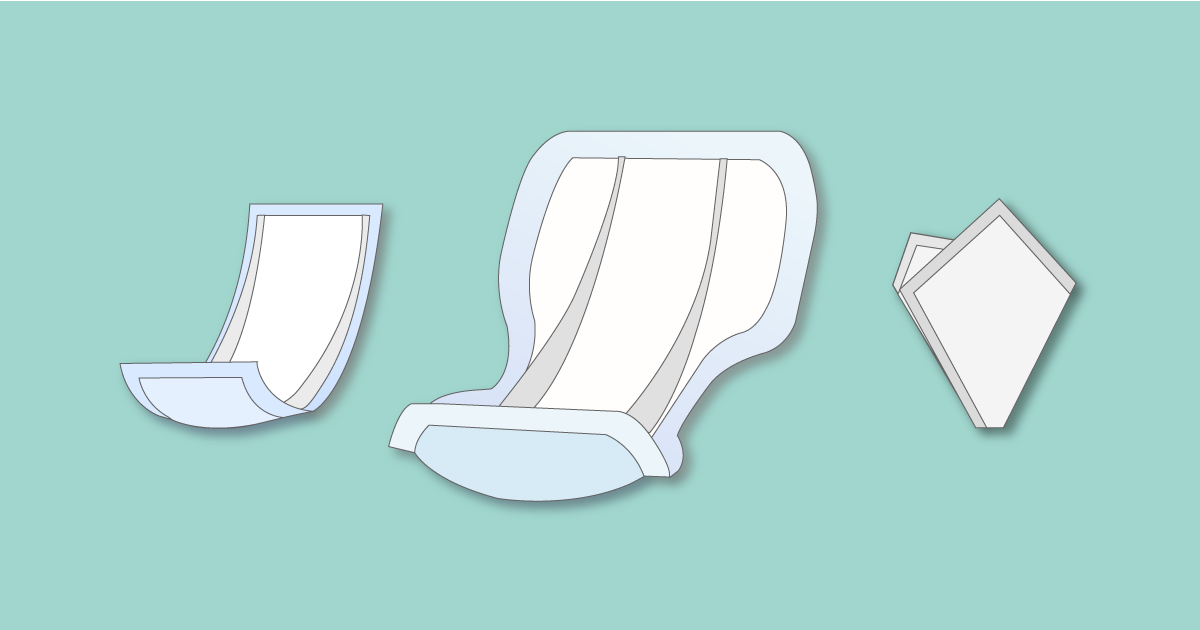
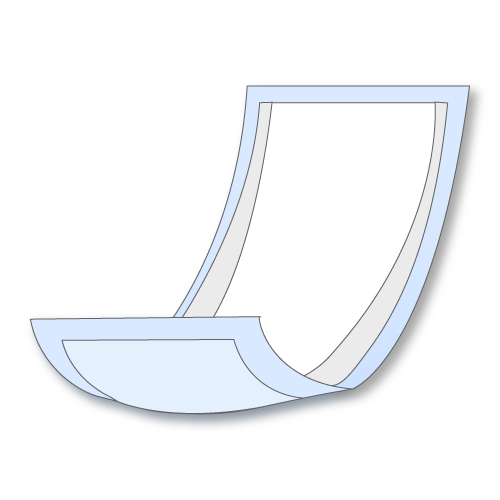
The rectangular-pad examples described here commonly have reference absorbency of around 150–450mL (1–3 reference voids). Similar-looking products may differ in features such as standing leak guards and breathability.
For these examples, 1 reference void is calculated as 150mL.

Incontinence insert pads are available in 3-fold and 2-fold formats. 3-fold pads are often used with tape-fastened adult diapers, while 2-fold formats are common among pads designed for pull-on adult diapers. The pull-on adult diaper pads described here have fixing features at the front and back, making them easier to position and helping them stay in place when the adult diaper is pulled up or down.
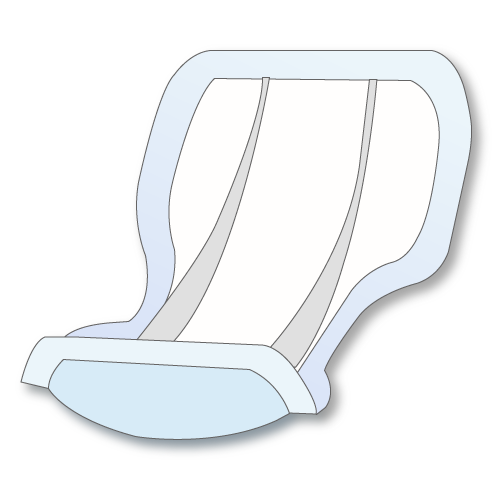
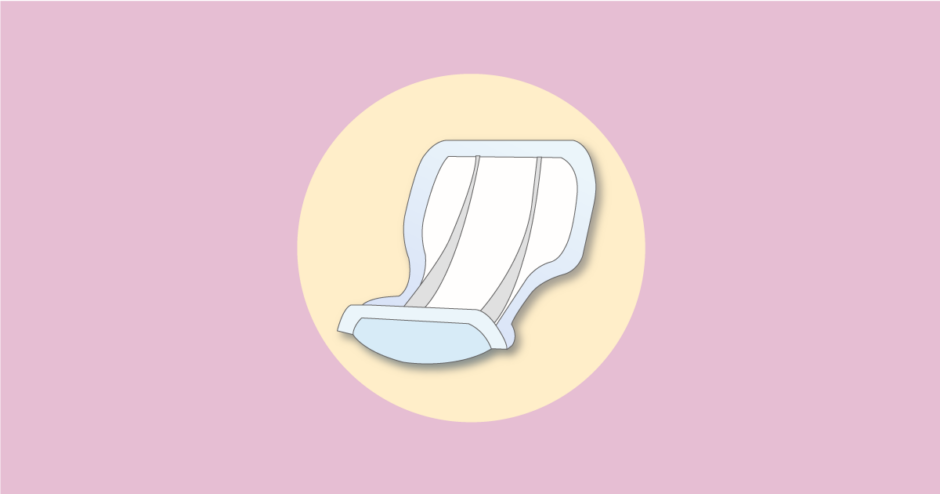
The contoured shape is common among the larger incontinence insert pads described here, with reference absorbency starting around 600mL (approximately 4 reference voids). The narrower crotch section is designed to interfere less with thigh movement.

Some pads for men are shaped to wrap around the penis. Designs include shorter rectangular pads that are folded into shape and pouch-like pads. If the penis is short, the wrapped section may come loose more easily, so check for displacement or leakage after fitting.
Structure and performance
The performance of incontinence insert pads varies. See the detailed guide to their structure and performance.
Absorbency
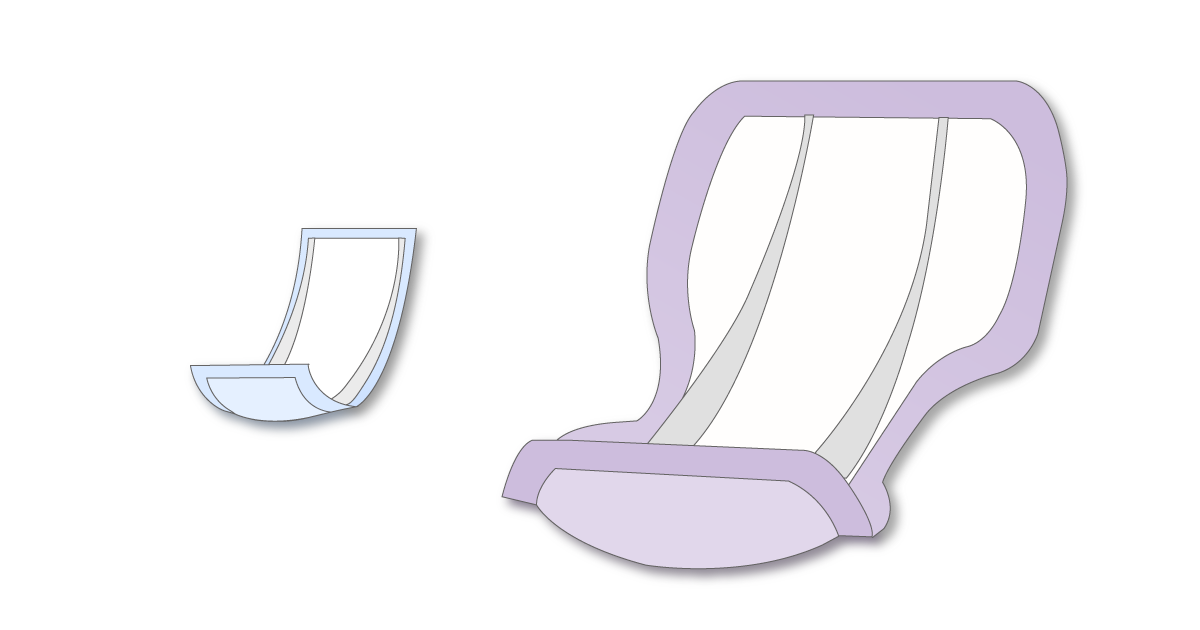
2–13 reference voids (absorption-count guide)
The 2–13 reference-void range above describes examples in the Japanese guide, not an exhaustive current-market minimum or maximum. A manufacturer’s label is a reference value, not a guaranteed number of actual urinations.
Combining products
The combination choices below describe the author’s practical approach. They are not a manufacturer endorsement of every combination; check the combinations and size limits specified for the products you use.
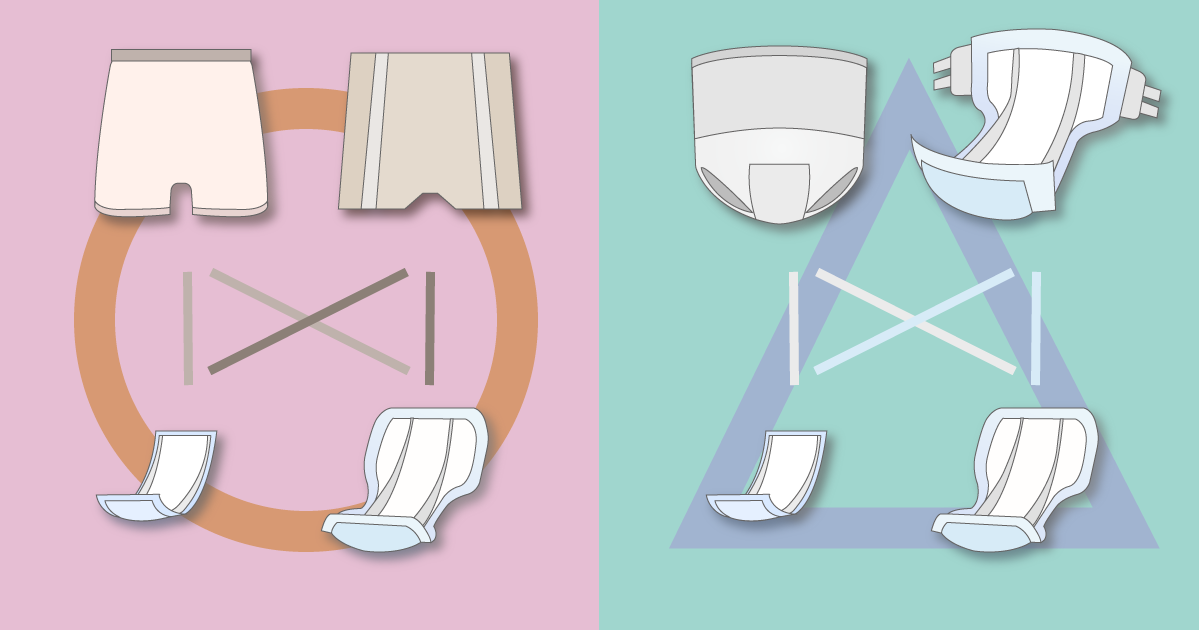
The author starts by combining an incontinence insert pad with well-fitting underwear, such as fixation pants. This uses 1 absorbent layer. Combining an incontinence insert pad with pull-on adult diapers or tape-fastened adult diapers adds another absorbent layer. It provides 2 layers of protection, but care is needed to avoid excessive bulk.

The author of Adult Diaper Information Center Japan is not recommending tape-fastened fixation pants here. This discussion is written with the hope of future developments. Ultra-thin tape-fastened adult diapers, used as an outer cover, are an alternative.
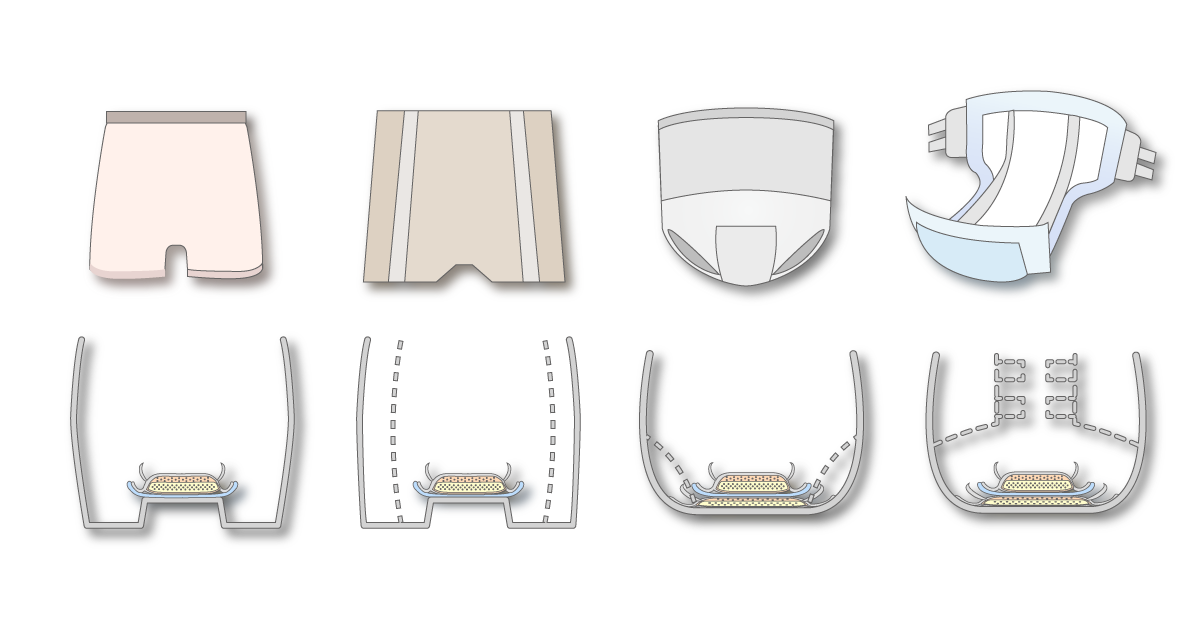
Pull-on and tape-fastened fixation pants avoid unused absorbent material.In the author’s approach, ultra-thin pull-on adult diapers or tape-fastened adult diapers are chosen to minimize unused absorbent material.The author favors simpler combinations to reduce their effect on posture.
Choosing incontinence insert pads
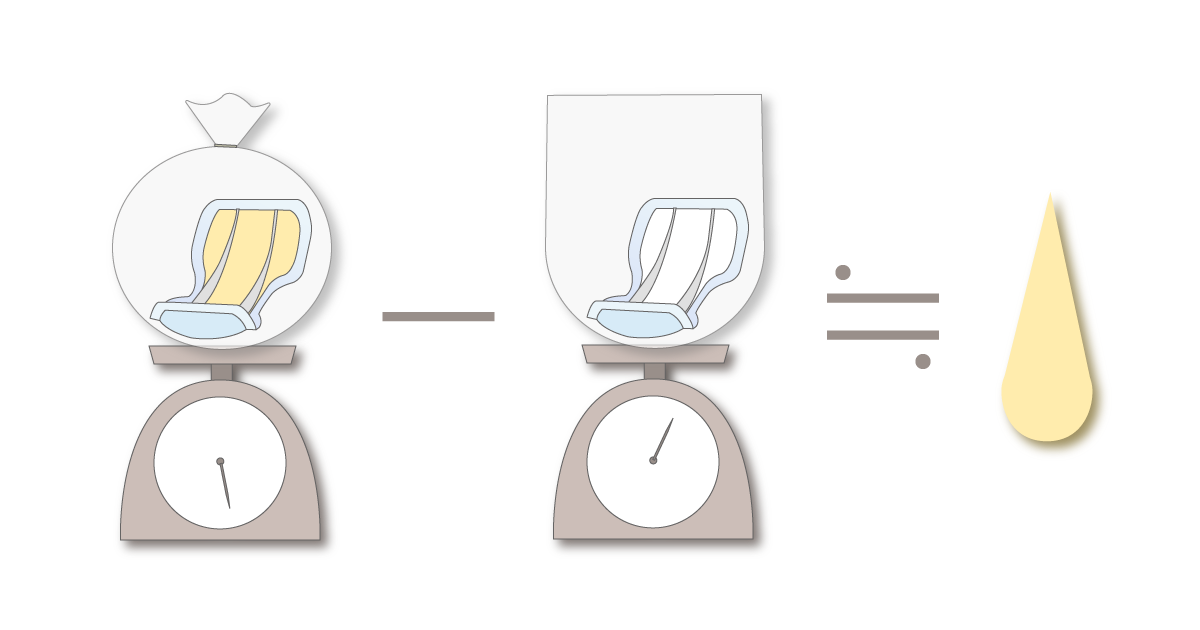
Measure urine volume and use that figure when choosing an incontinence insert pad. Because urine volume varies by time of day, keep a bladder diary.
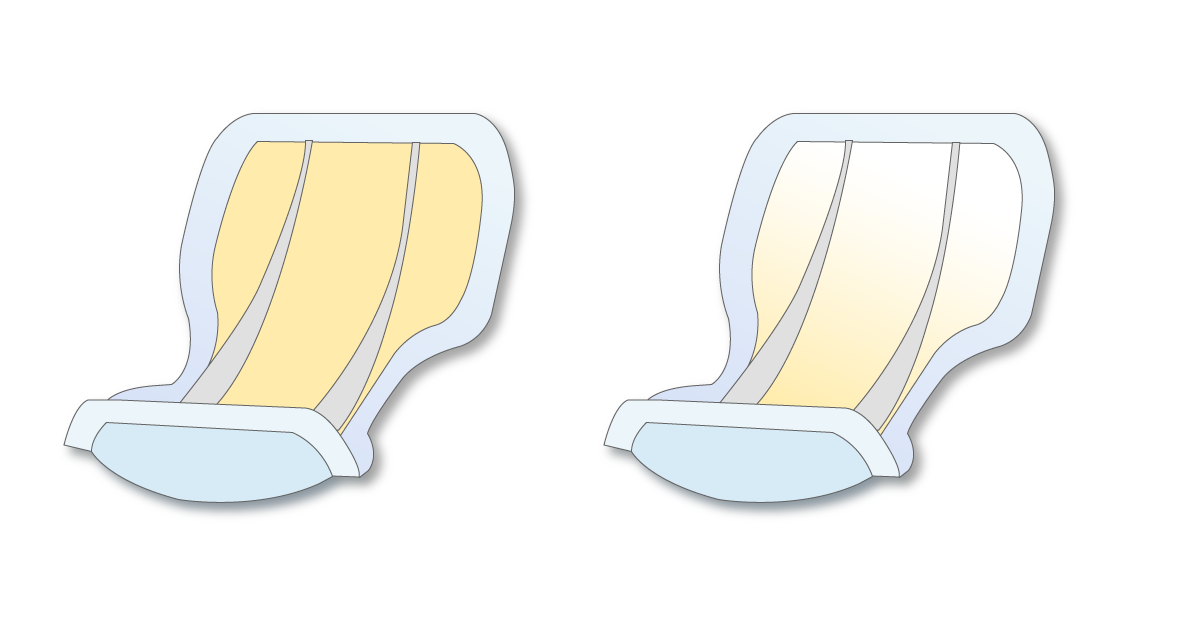
Check whether the figure is total absorption capacity or reference absorbency. Total absorption capacity describes absorption across the whole absorbent area; reference absorbency is a practical guide for use. The Japanese source mentions a rough range of 50–70% when discussing reference absorbency relative to total capacity. This is not a universal conversion or a validated factor for every product: usable absorbency depends on the product, testing and conditions of use. Use the manufacturer’s reference figure and ask the manufacturer about product-specific conversions. Hospital and care-facility products may show total absorption capacity, so check which figure is given.Compare the measured urine volume with the product’s reference absorbency when choosing an incontinence insert pad.

Retail labeling is covered by industry guidance. The Japanese source uses 150mL per reference void to explain many retail labels and treats these counts as reference absorbency. Check the volume stated on the actual package before comparing it with measured urine volume. A reference count is not a guarantee that a pad can be used for that number of actual urinations.
Japan’s industry labeling guidance requires the reference count and the assumed volume per void to be shown together; the manufacturer sets that volume. JHPIA labeling guidance Japanese
Using standing leak guards
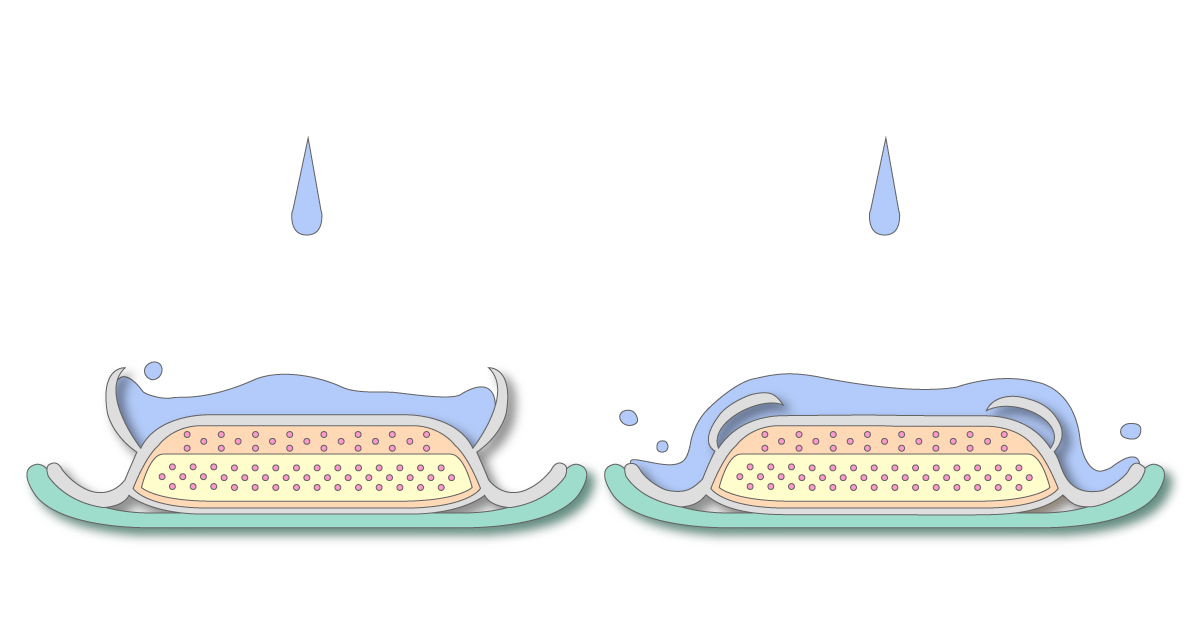
In the author’s approach, an incontinence insert pad with standing leak guards is chosen when leakage occurs. If there is no leakage, a pad without these guards may be suitable.
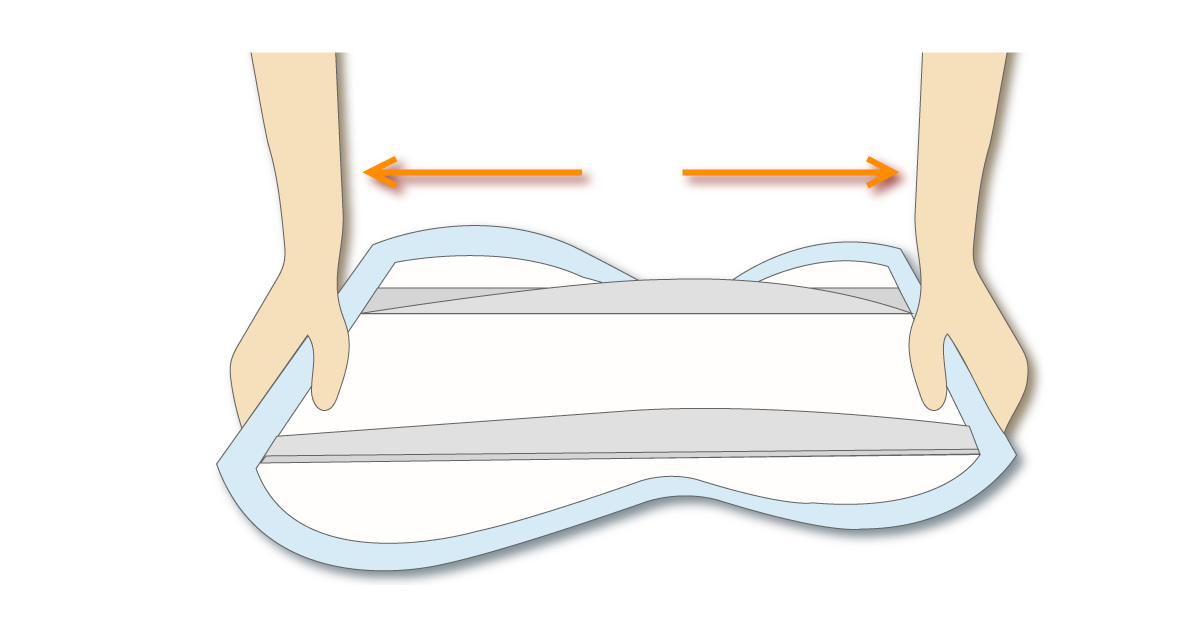
Gently extend the pad from front to back to raise the standing leak guards. If they still do not stand up, gently raise them with your fingers.
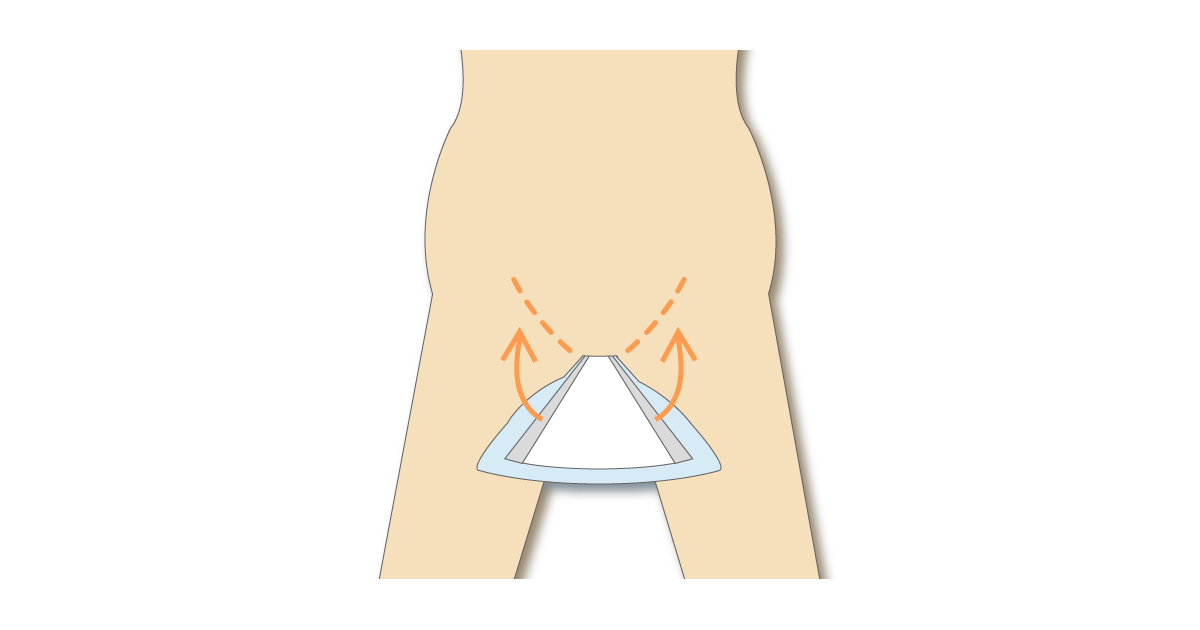
Gently position the standing leak guards along the groin. Avoid pressing them too firmly against the skin, as they can place stress on it.
Precautions for incontinence insert pads
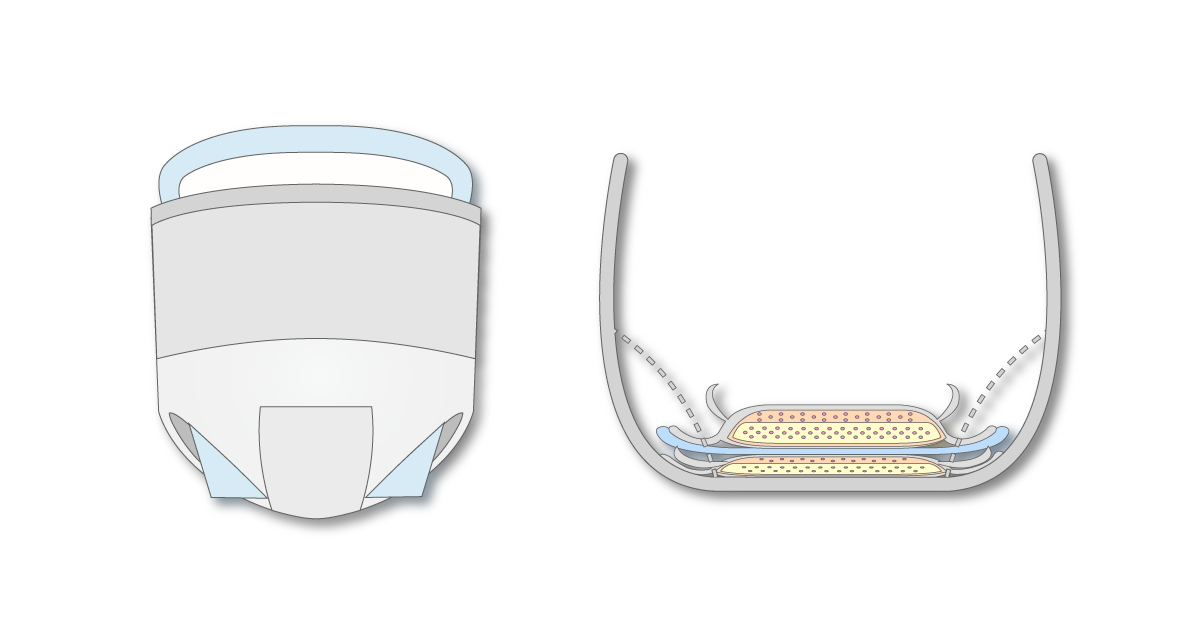
Choose an incontinence insert pad size that does not flatten the standing leak guards of the pull-on adult diapers or tape-fastened adult diapers.
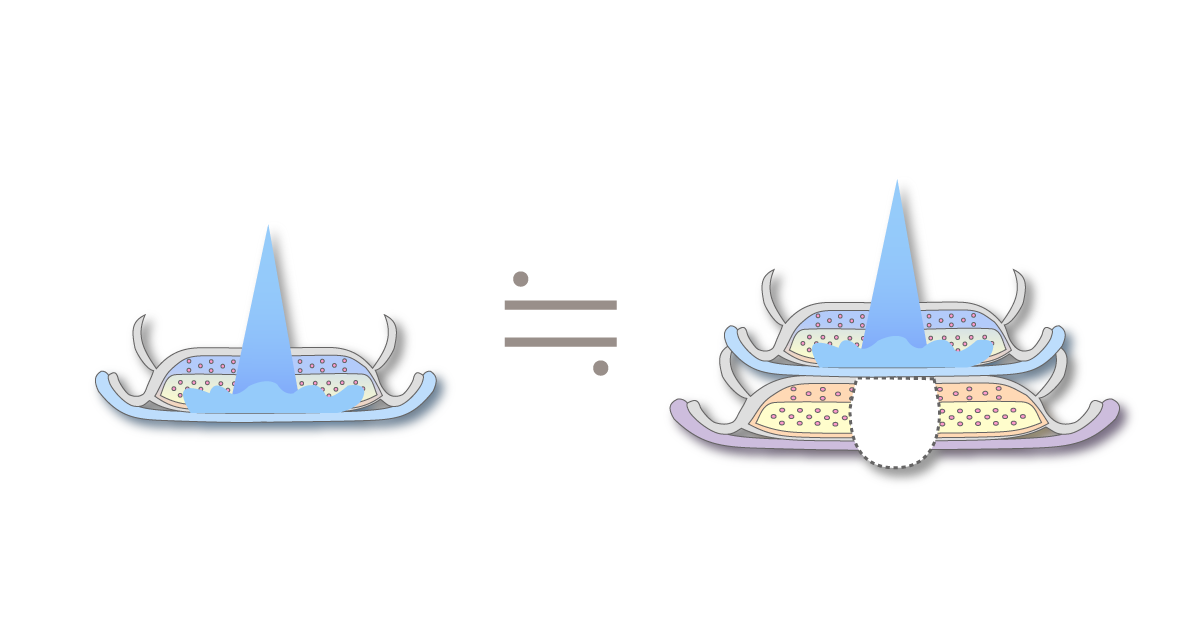
A pad’s waterproof backing does not let urine pass through to the pad underneath, so layering such pads does not add useful absorption. The extra thickness may also restrict movement.
The pad size and absorbency that fixation pants can support differ by product. Some accommodate large pads or larger urine volumes, but check that the weight after absorption does not cause slipping, and use them within the range specified by the manufacturer.
Combining pull-on adult diapers with an incontinence insert pad can sometimes help prevent leakage by using 2 sets of standing leak guards.
Even when using 2 sets of standing leak guards to help prevent leaks, the author recommends an ultra-thin outer product, whether pull-on adult diapers or tape-fastened adult diapers.

Large rectangular flat sheets are sold. The Japanese source describes these as lower-absorbency, lower-priced products without standing leak guards, despite their large size.They can be used as sheets during perineal cleansing, for example.
Use 1 suitable incontinence insert pad rather than layering pads.