English edition of a Japanese guide by Hiroshi Yagi. Japanese original: first published June 17, 2019; updated October 7, 2026. Read the Japanese original (Japanese).
Cross-fastening means securing the upper and lower tabs of tape-fastened adult diapers at opposing angles. This illustrated guide explains the steps and precautions when considering it to address gaps around the groin or back, or slipping.
What is cross-fastening?
Cross-fastening means angling the lower tabs upward and the upper tabs downward. Fastening methods differ by product, so check the manufacturer’s instructions before use. There are several ways to position the tabs.
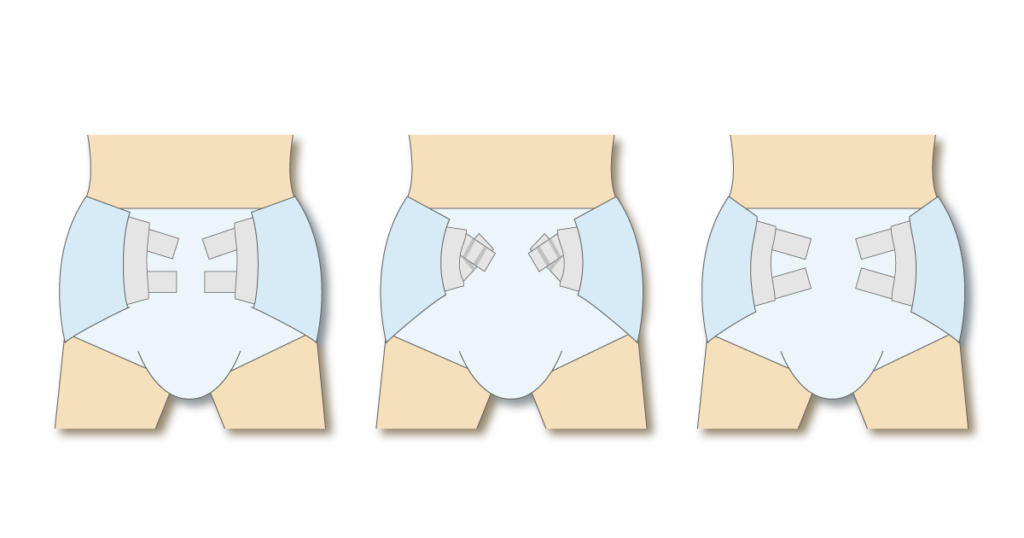

Fastening methods vary between tape-fastened adult diapers. Follow the instructions provided by each manufacturer.
How to cross-fasten the tabs
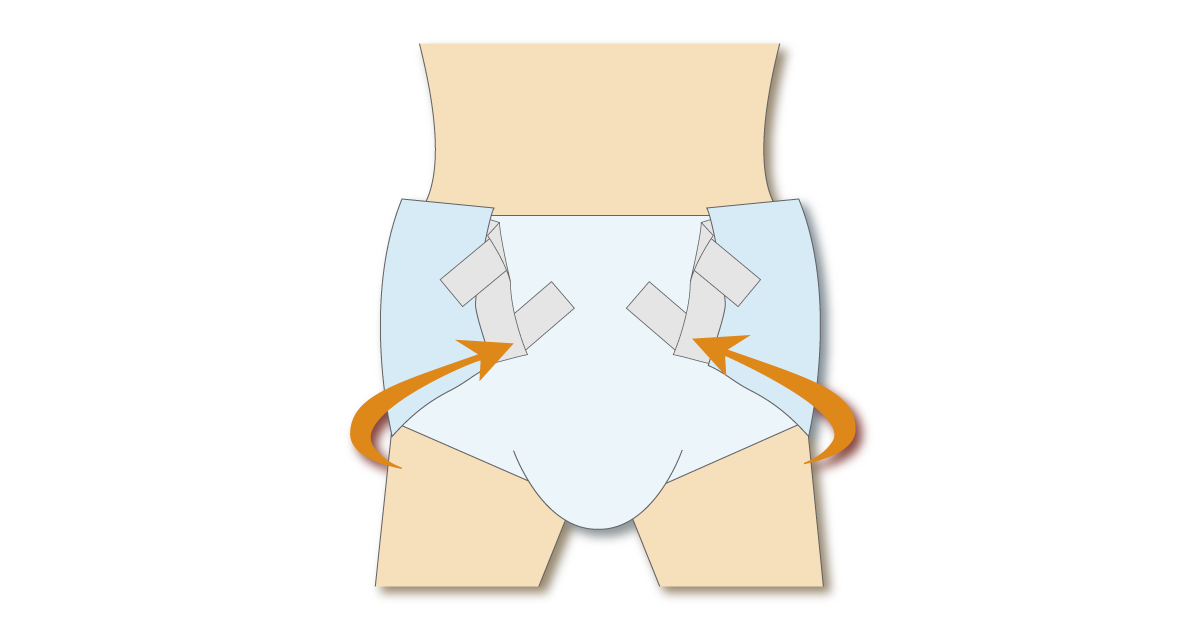
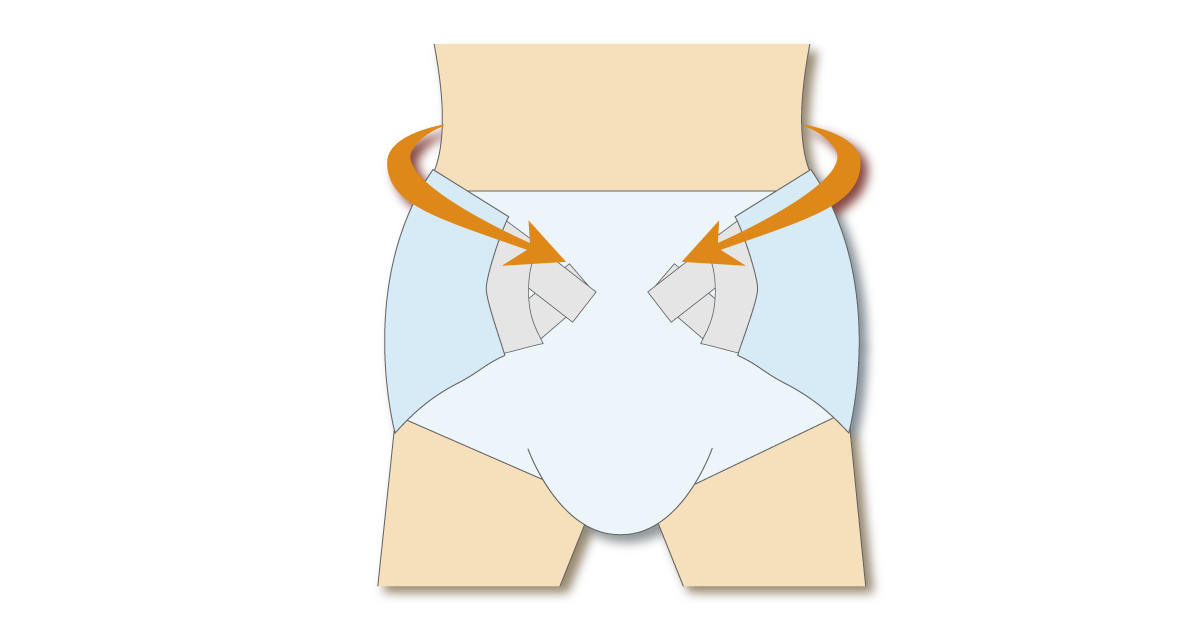
2 examples of fastening patterns
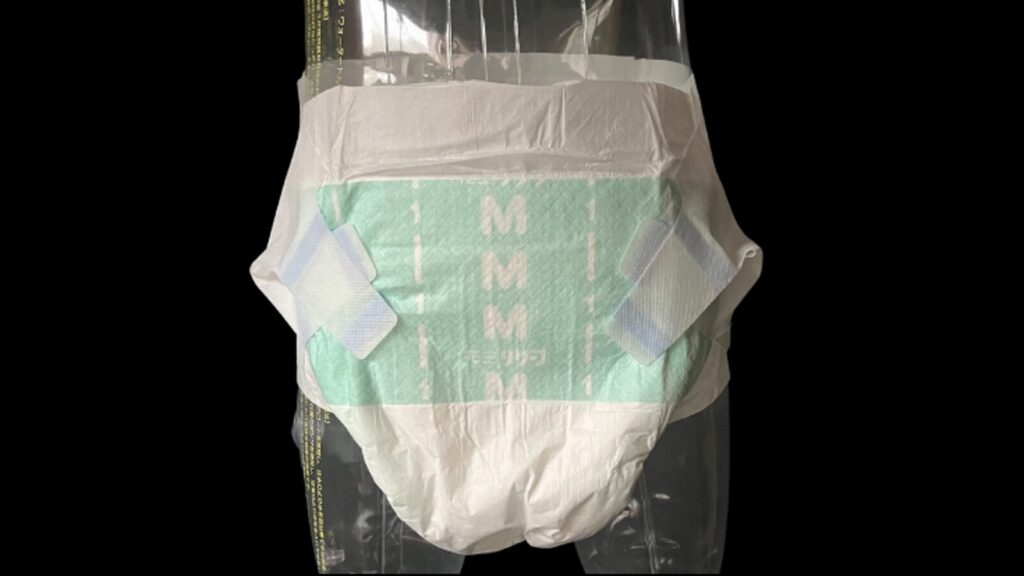
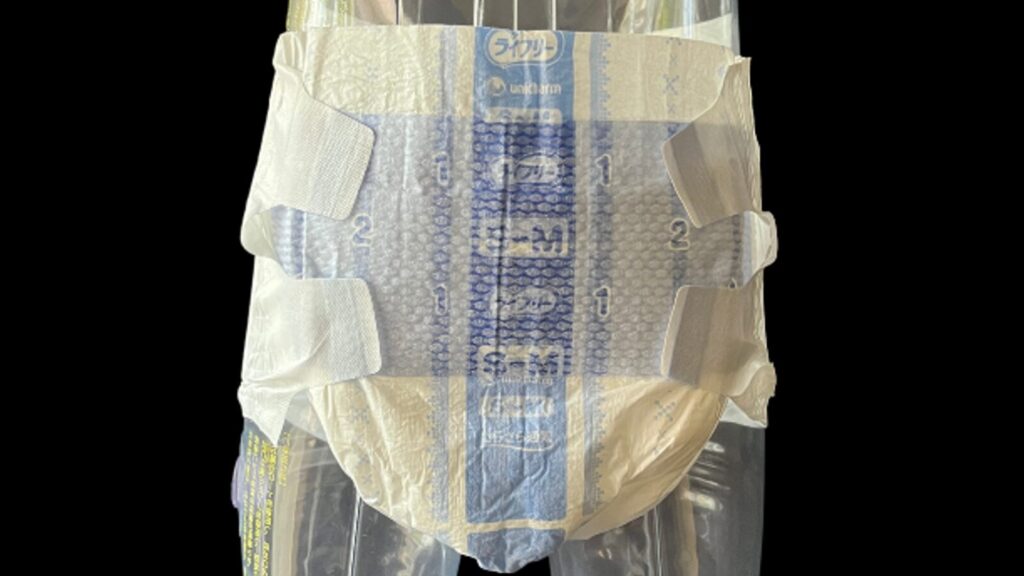
Tab-fastening methods differ by manufacturer.
Possible benefits of cross-fastening
When the lower tabs are angled upward
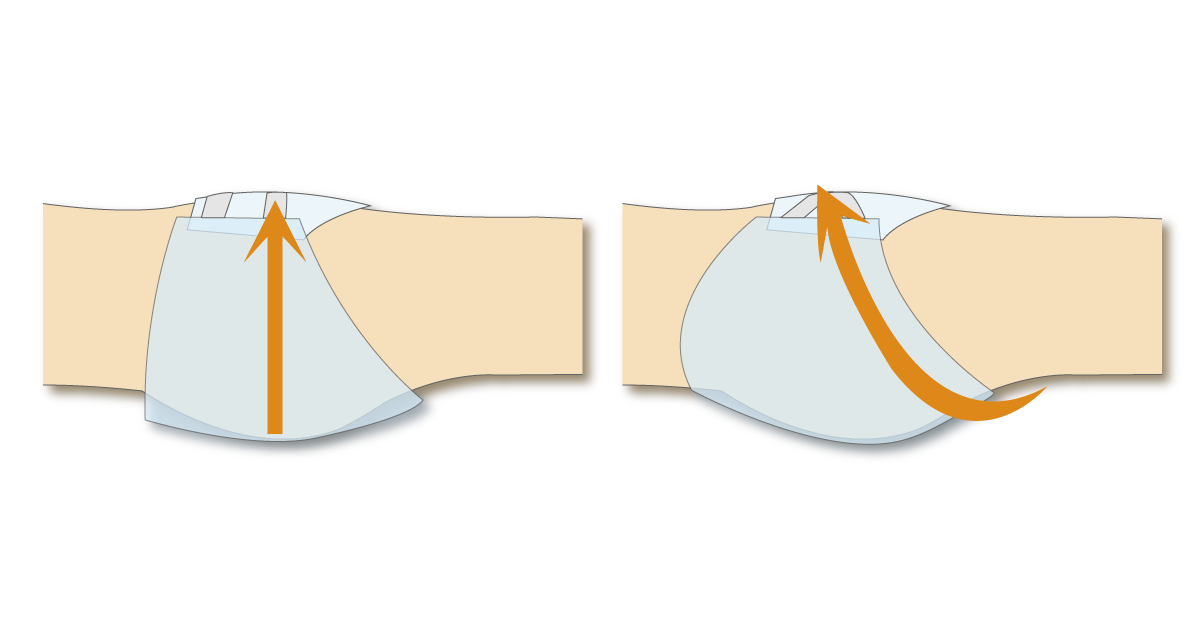
Angling the lower tabs upward can help the diaper follow the groin area more closely and reduce gaps. If leakage around the groin is a concern, check the fit around the legs.
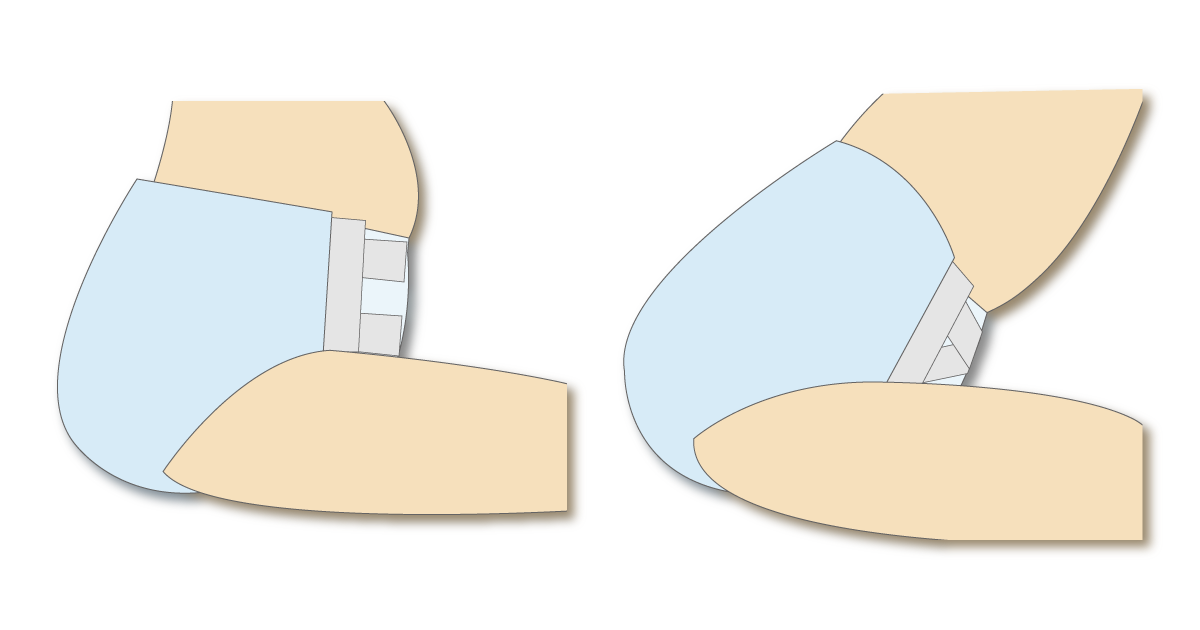
Depending on the fastening arrangement, the tabs may interfere less with hip movement when standing up or sitting. Also ask the person wearing the diaper how it feels when leaning forward.
When the upper tabs are angled downward
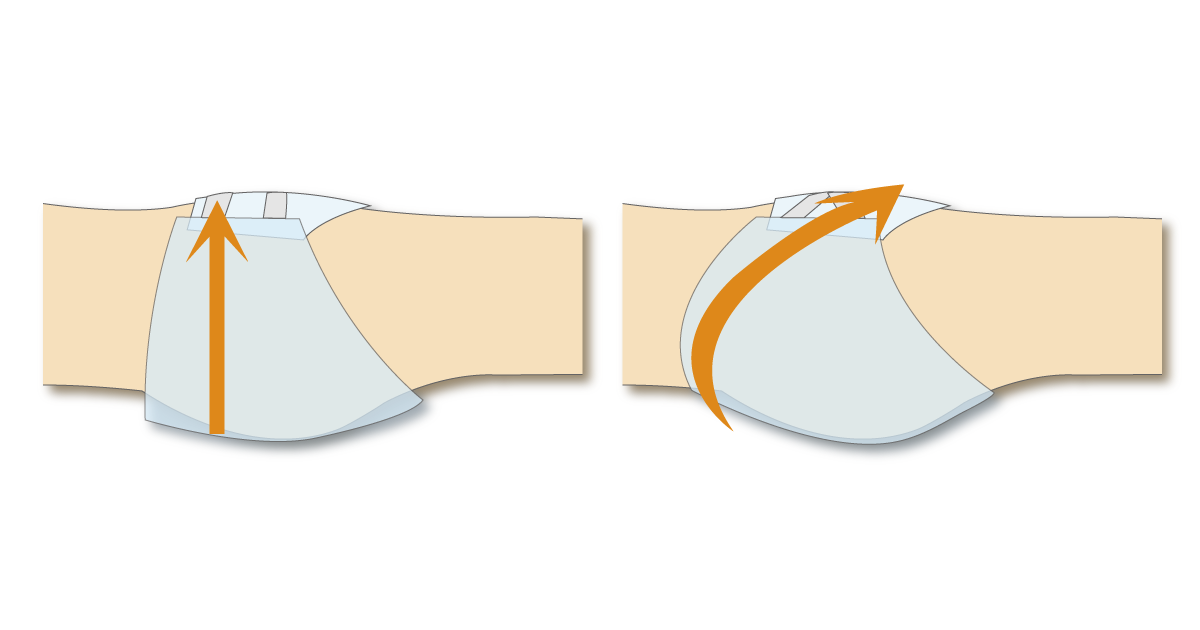
Angling the upper tabs downward can help reduce gaps at the back. If leakage from the back is a concern, check the fit there as well.
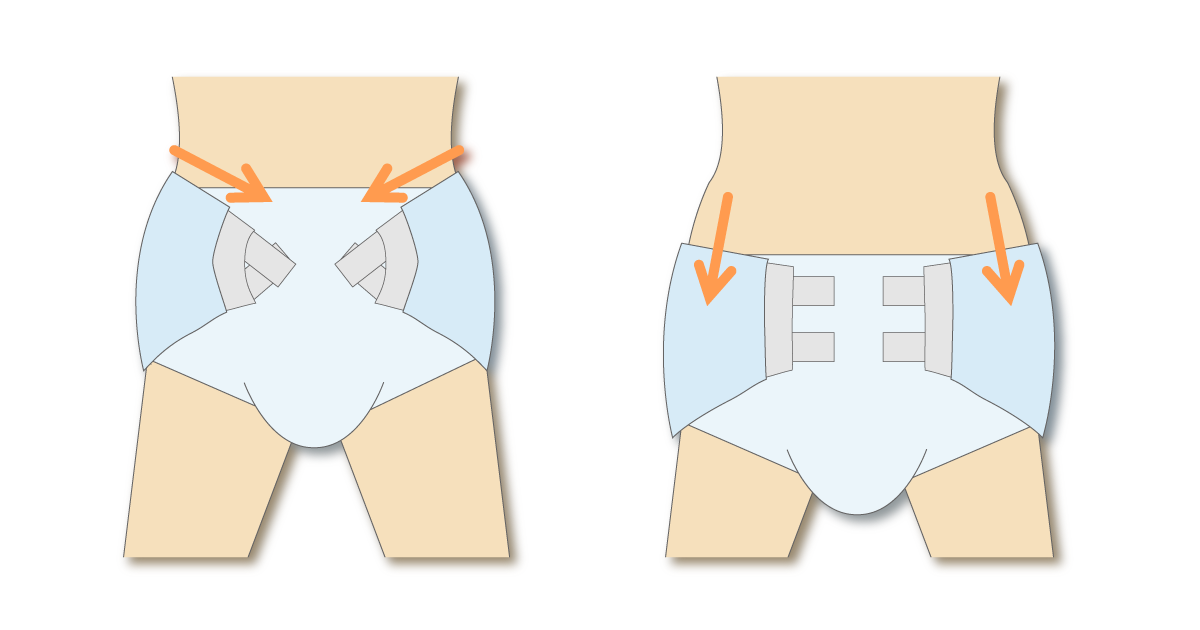
Fastening the upper tabs to follow the pelvis may help the diaper stay in place. Check that it has not shifted after movement.
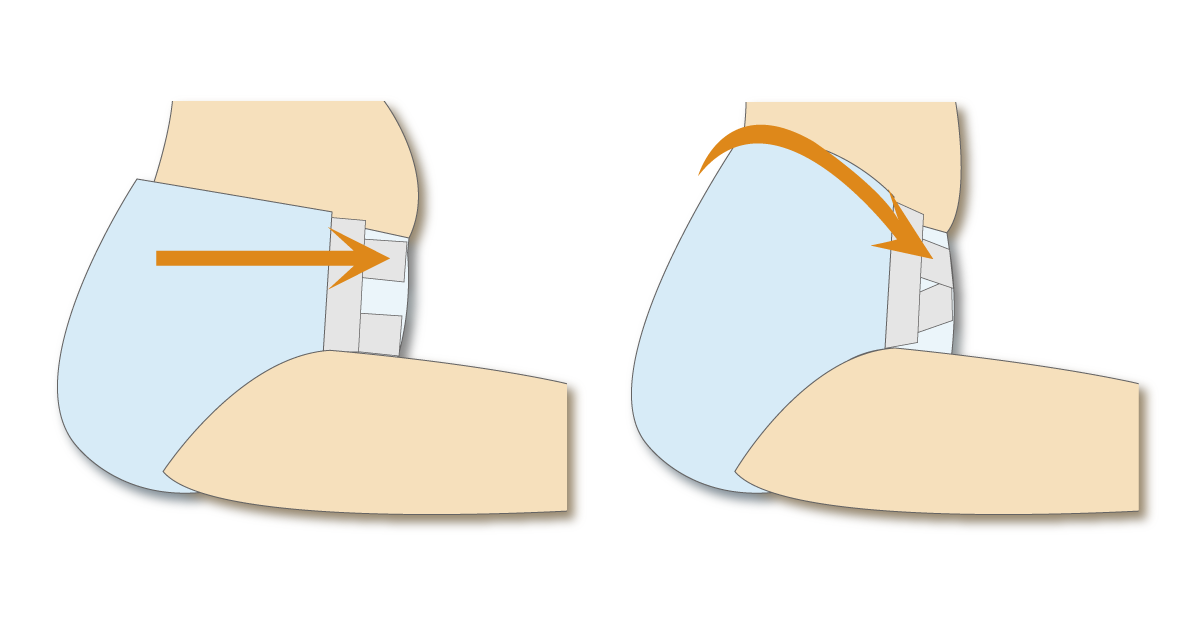
Fastening the upper tabs tightly in a horizontal direction may press against the abdomen when sitting or leaning forward. After angling them downward, still check for pressure or digging into the skin.
Cross-fastening: precautions
Pulling the tabs firmly at an angle can cause pressure on the skin or digging in. If there is discomfort, do not force a cross-fastened arrangement; reconsider the fastening method.
Some products cannot be cross-fastened. Follow the manufacturer’s instructions for use.
Reviewing the fastening method may change the fit of tape-fastened adult diapers. If leakage around the groin or back is a concern, check the fastening while taking care to avoid excessive tightness.