English translation of an article originally published in Japanese on March 31, 2019. Read the Japanese original (Japanese). Product information and dates refer to the original article. Images and manufacturer videos may contain Japanese.
Soft-stool leakage can soil underwear and bedding, increasing the burden of changing and laundry. If leakage continues while using a urine-care pad, consider a pad designed for soft stool. Soft stool contains both liquid and solids. On a urine-care pad, the solids can clog the surface, allowing liquid to spread. Soft-stool pads incorporate features such as specially designed topsheets to help contain stool.
Soft-stool pads
Types
Shapes include small, medium, large, and sheet types. Several manufacturers sell them, but their shapes and methods of use differ.
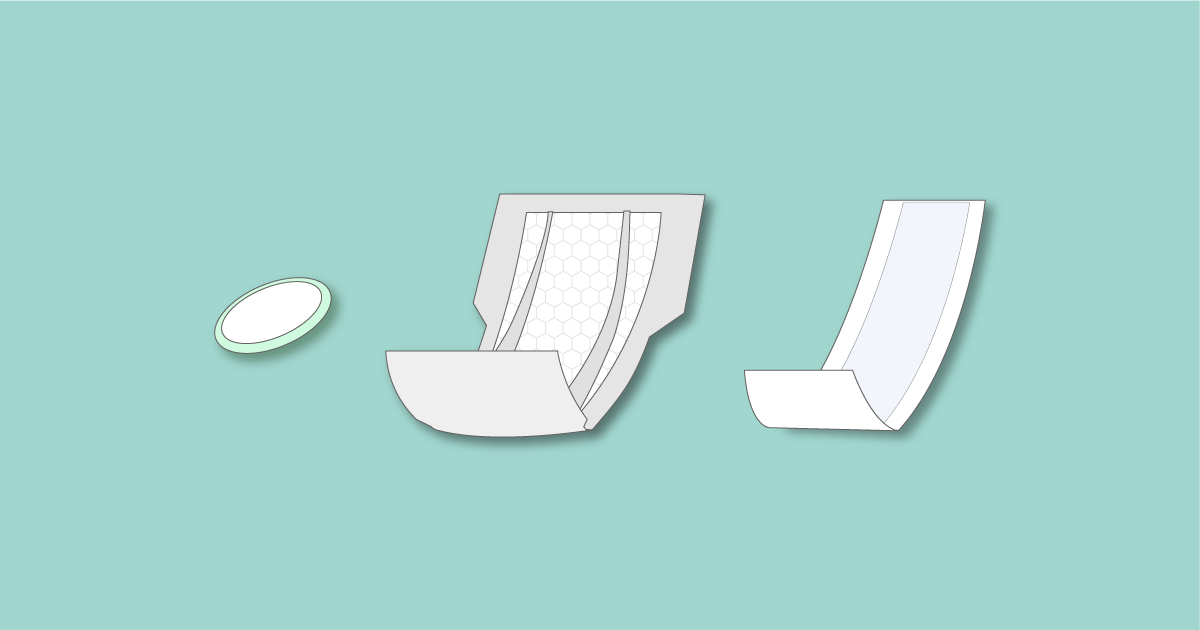
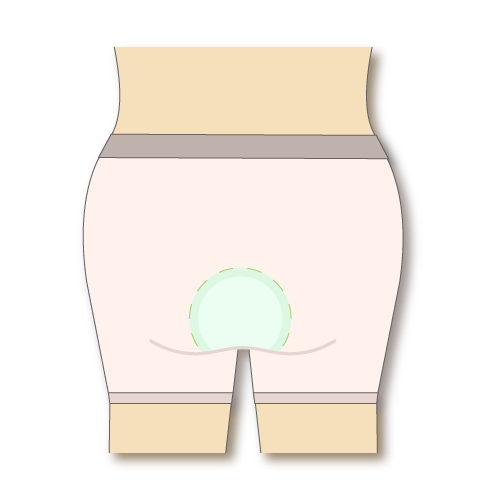
Place precisely around the anus and attach to underwear. Compact and convenient to carry. Designed for very small amounts of fecal leakage.
Reference Lifree Sawayaka Pad for Slight Soft-Stool LeakageUnicharm official website

A larger pad with a mesh topsheet. Covers a wider area and also absorbs urine. The cost per pad is relatively high.
Reference Attento Soft-Stool Protection PadDaio Paper official website
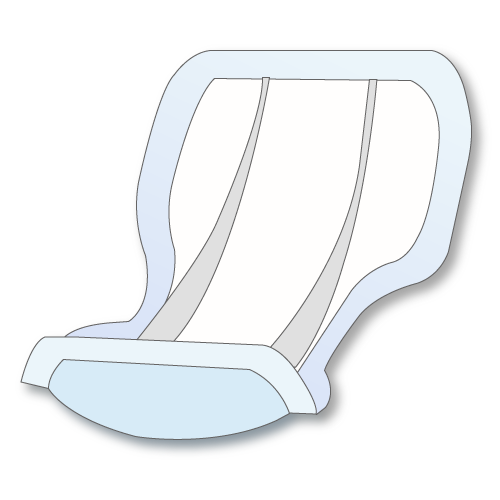
A very large pad suitable for watery stool. Large pads provide coverage when both urine and stool volumes are high. Their size limits the products they can be combined with.
Reference Nepia Tender Large Omakase Pad, Also for Watery StoolOji Nepia official website
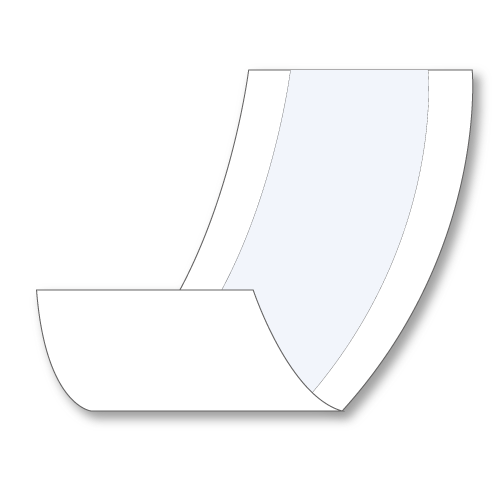
Has no waterproof backing. Allows liquid through to the pad below while catching solids. Must be combined with another pad.
Reference Sheet to Help Prevent Soft-Stool LeakageLivedo Corporation official website
Actual product sizes
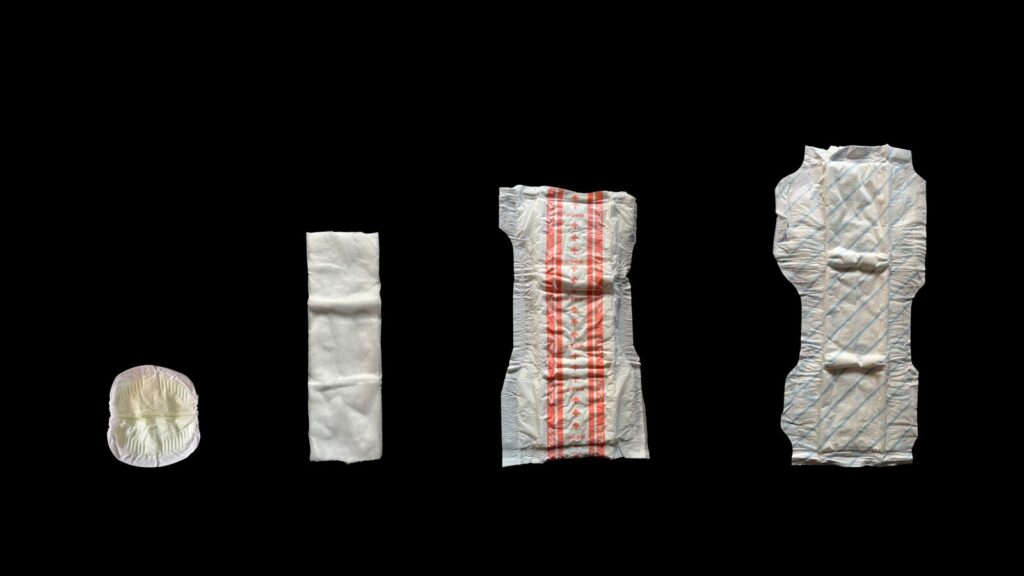

Products are available for anything from small to large amounts of fecal leakage.
Structure
Soft-stool pads differ in structure from urinary incontinence pads.
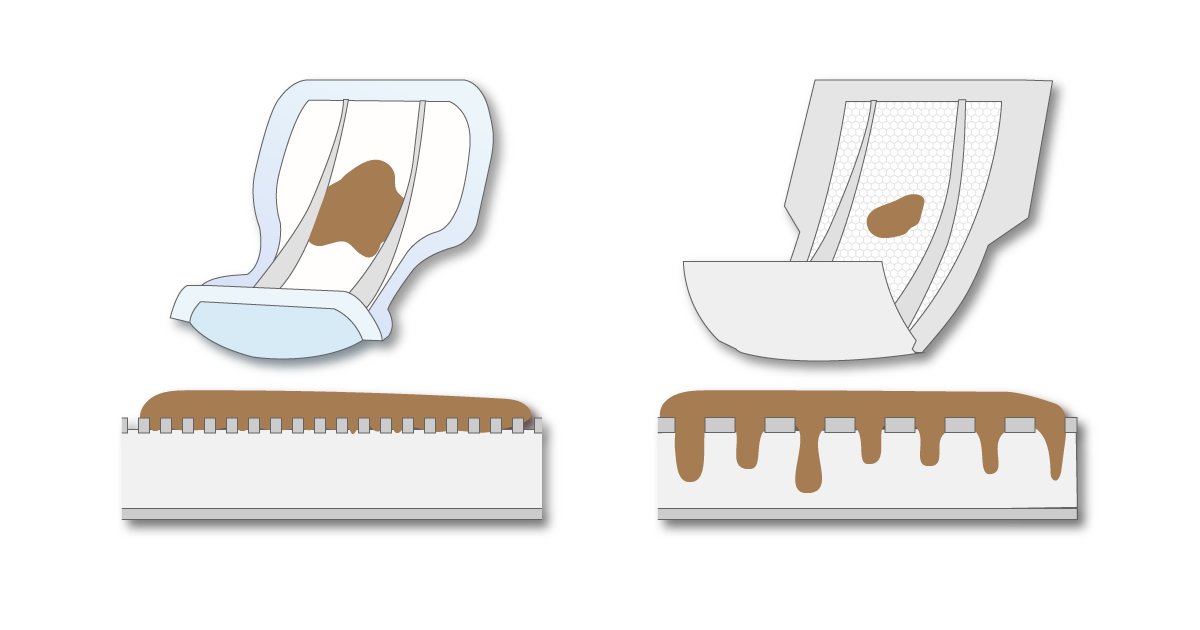
In addition to liquid, soft stool contains undigested material, mucus, and other matter. On urine-care pads, these can clog the topsheet, allowing liquid to spread before it is absorbed. Products designed for soft stool use different approaches, such as mesh topsheets or special fibers to catch stool.
Combining soft-stool pads
Choosing combinations of soft-stool pads can be complicated. Choose a comfortable combination that prevents leakage. The combinations shown avoid layering absorbent pads.

How to use soft-stool pads
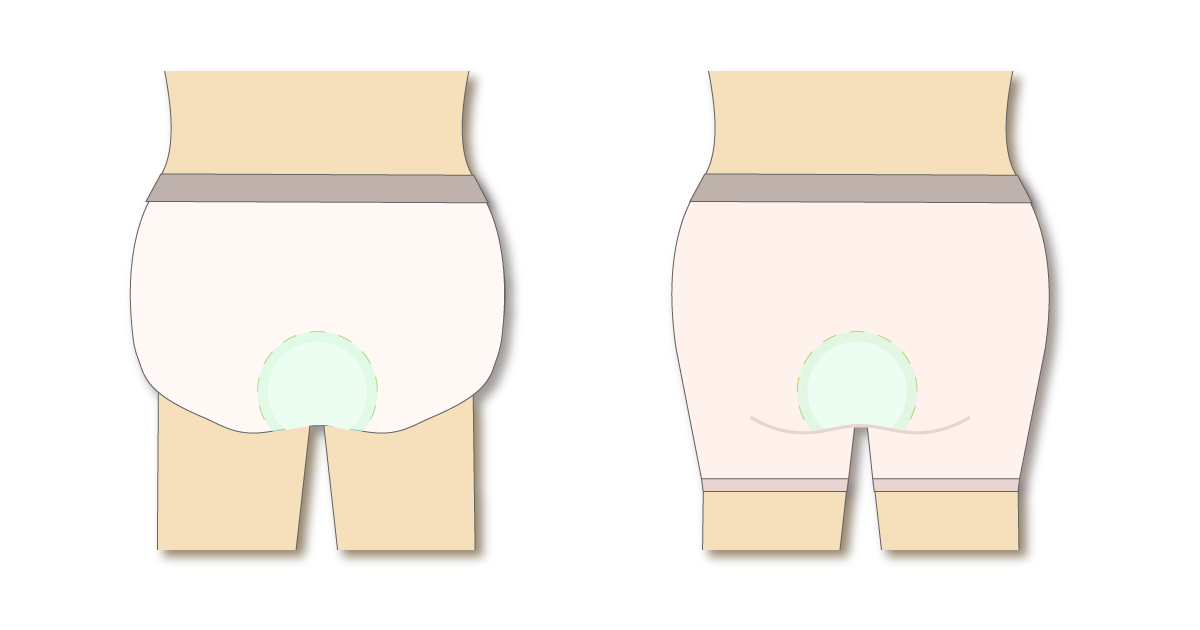
Attach a small soft-stool pad to regular underwear or pad-holding pants. Position it to cover the area around the anus.
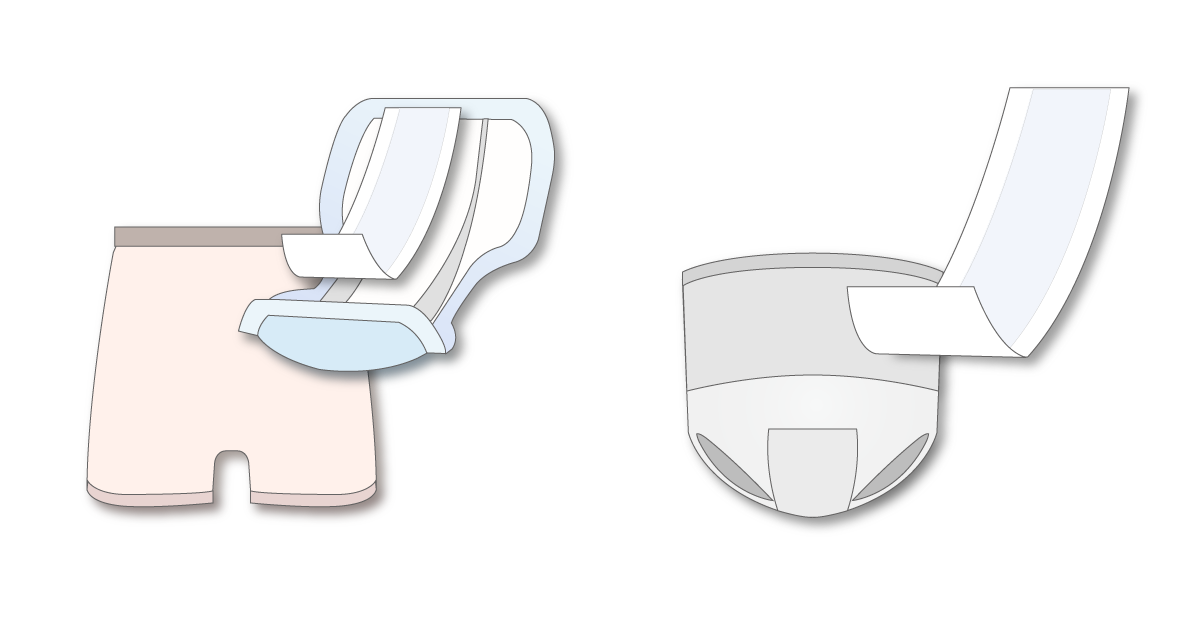
Place a soft-stool sheet on a urinary incontinence pad and use it with pad-holding pants. Alternatively, combine a soft-stool sheet with pull-on adult diapers.
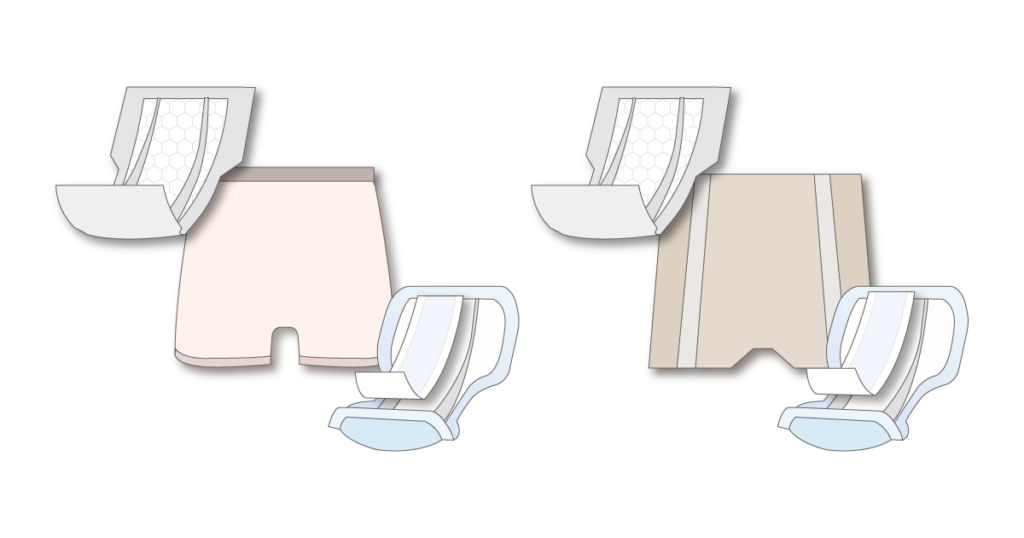
Combine pad-holding pants with a soft-stool pad. When combining a soft-stool sheet with a urinary incontinence pad, choose the size according to the amount of stool leakage.
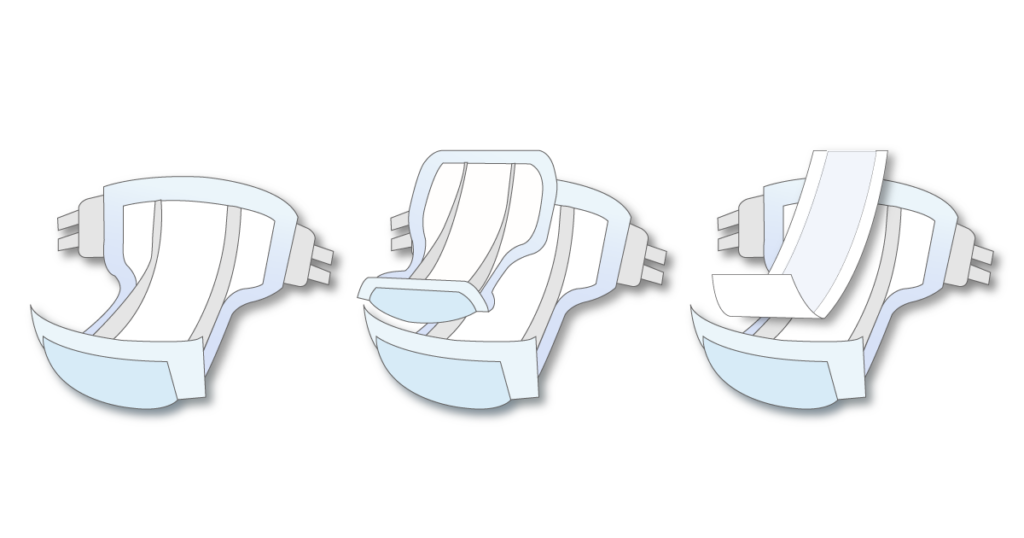
Use tape-fastened adult diapers alone to make use of their broad space. A large soft-stool pad or sheet can also be placed inside tape-fastened adult diapers.
Other approaches besides soft-stool pads
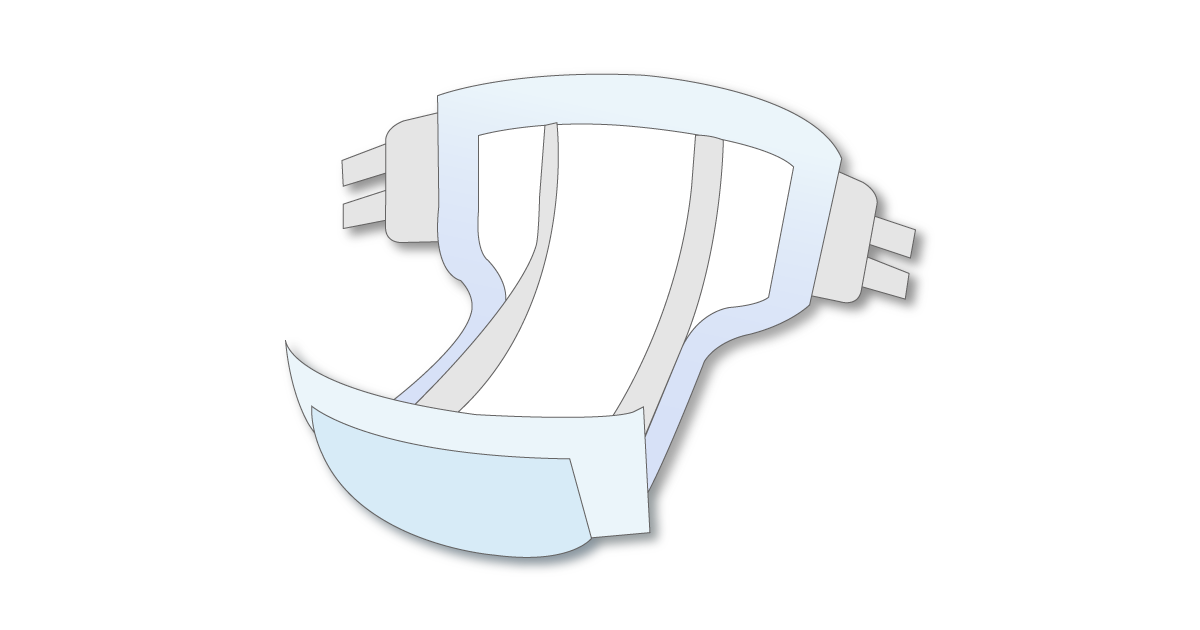
Wear one tape-fastened adult diaper on its own.
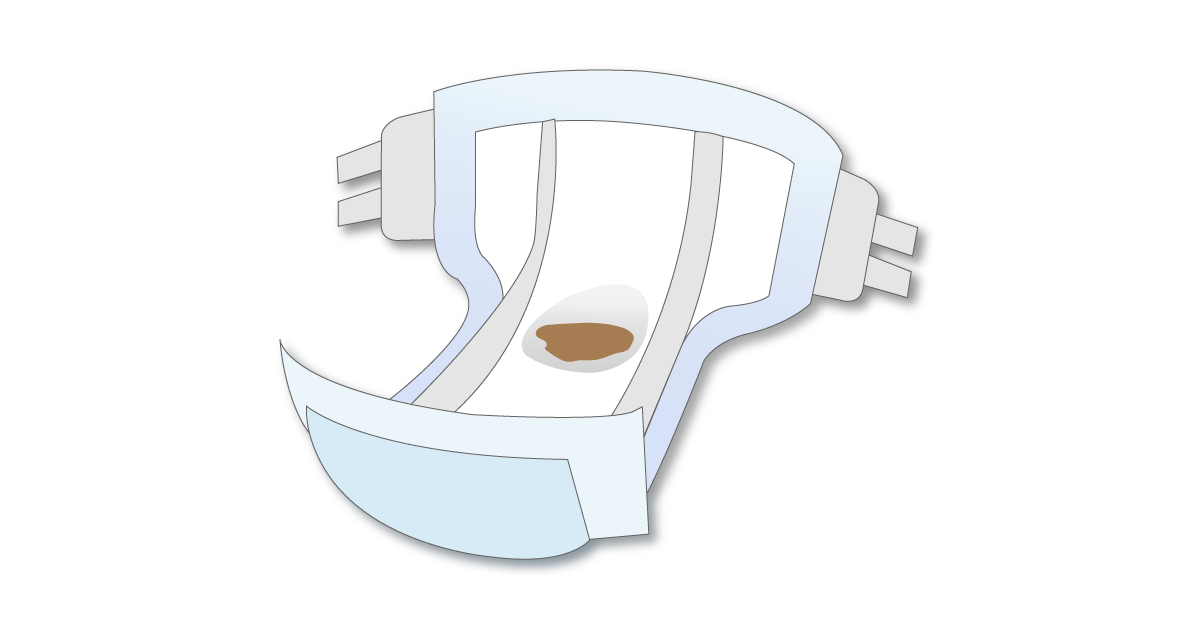
Use tape-fastened adult diapers alone. Soft stool flows into gaps, so when fitting the diaper, deliberately leave a little space where stool can collect.
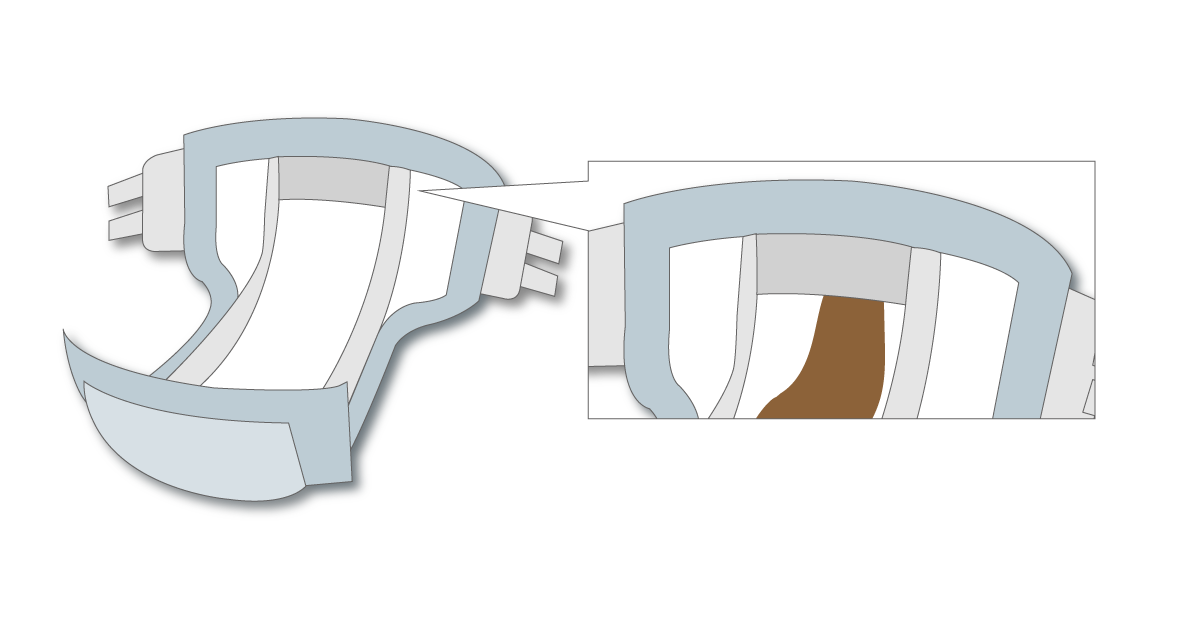
Some tape-fastened adult diapers have a pocket to prevent leakage at the back. Although the pad’s fine surface can become clogged, the structure helps contain soft stool.
Reference Attento Tape-Fastened Type with Back-Leak ProtectionDaio Paper official website
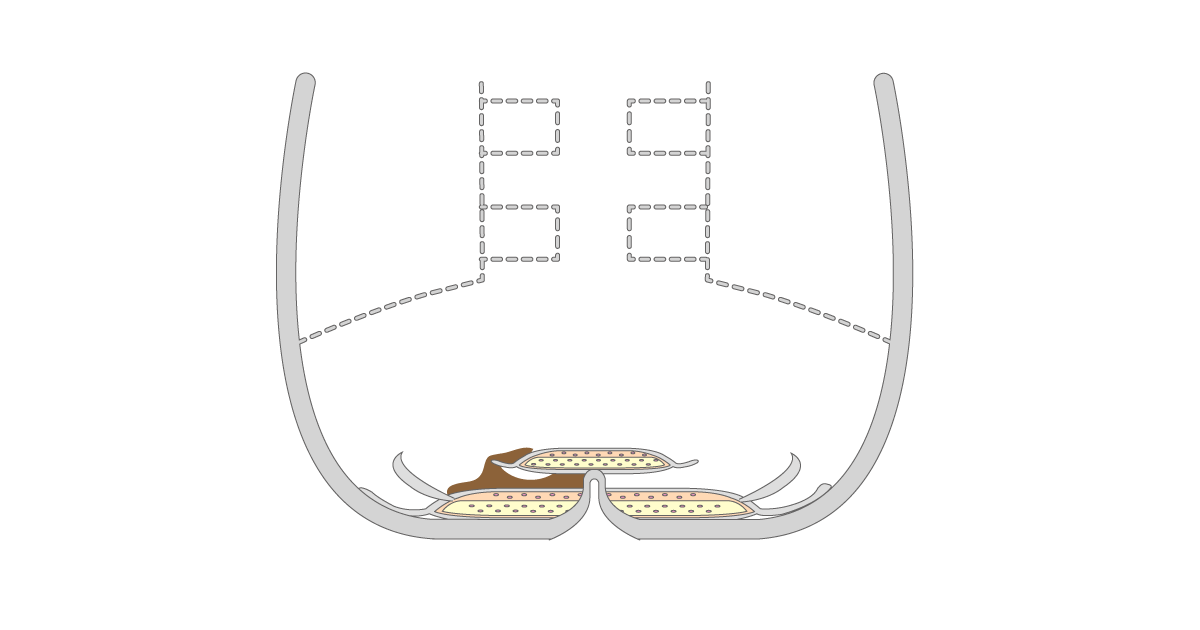
Some tape-fastened adult diapers provide space to collect soft stool. These are used without a urinary incontinence pad.
Reference Salva Anshin W Fit High-Absorbency Tape-Fastened DiapersHakujuji official website
Change promptly after diarrhea

Diarrheal stool is highly irritating to the skin and can contribute to skin problems. Change a pad promptly if it is soiled with diarrheal stool.
Diarrhea makes laundry difficult
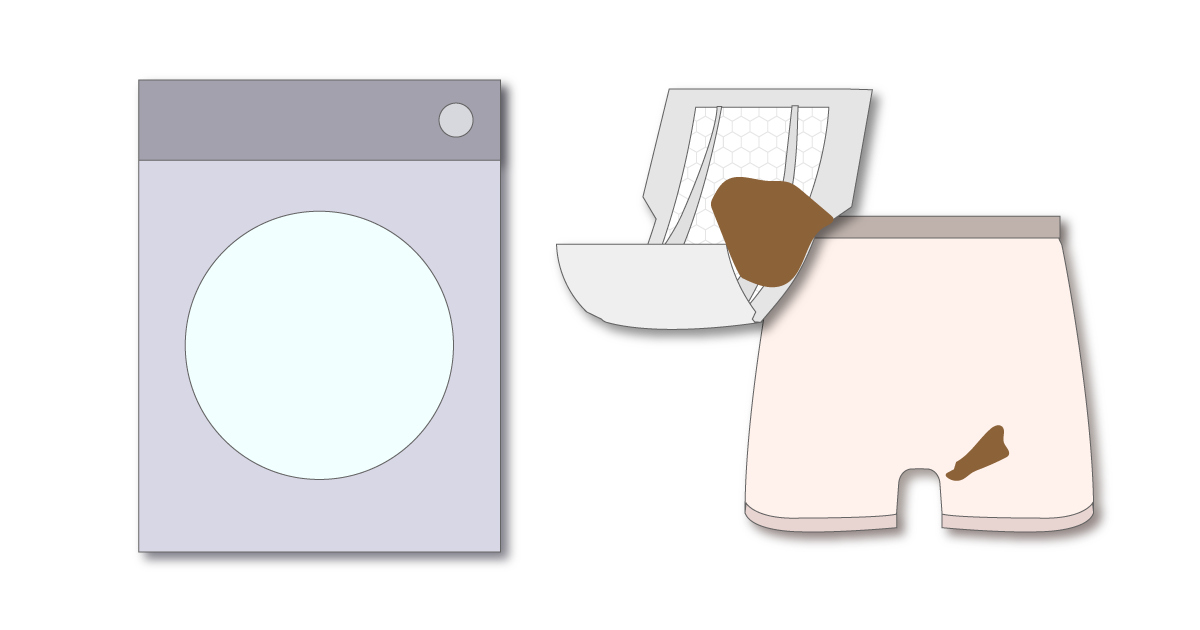
Diarrheal stool leaks easily. Disposable soft-stool pads can be discarded, but cloth pad-holding pants must be washed. This can create several kinds of burden.
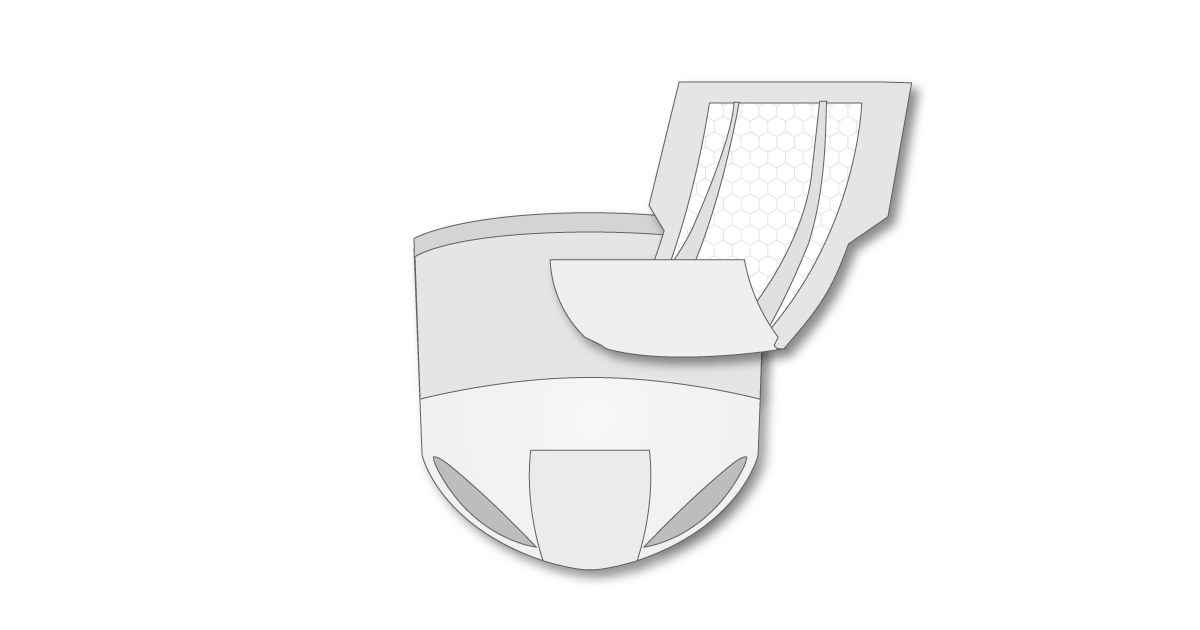
Adult Diaper Information Center Japan also does not recommend layering disposable diapers and soft-stool pads, but a flexible response is sometimes necessary.
Why does diarrhea occur?
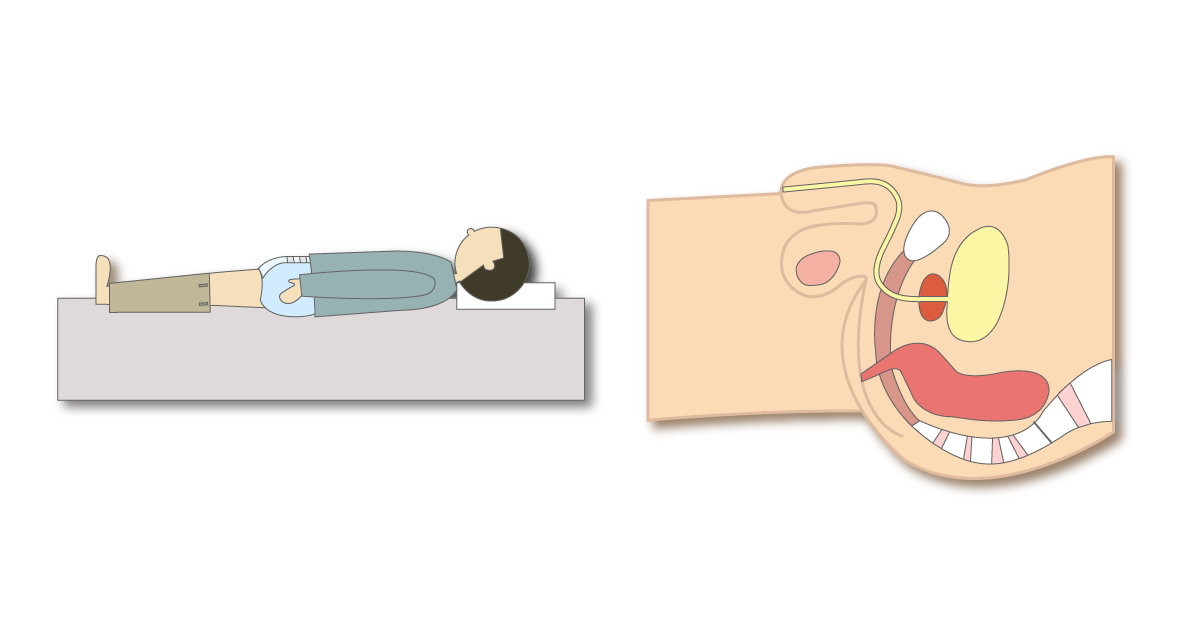
Passing stool while lying down is difficult. Constipation can develop, and laxatives may then cause diarrhea. The following article explains this in more detail. Please take a look.
 Posture for Easier Bowel Movements: Toilet Sitting and Support Equipment [2026 Guide]
Managing soft stool with diapers is difficult. The key is to consider why the stool is loose.