English translation of an article originally published in Japanese on May 22, 2019. Read the Japanese original (Japanese). Product information and dates refer to the original article. Images and manufacturer videos may contain Japanese.
When sitting down, standing up or entering the toilet becomes difficult, home modifications may be available under Japan’s long-term care insurance. This article introduces eligible toilet-related work, cost guides and application precautions. When beginning to consider work, consult your care manager or Community General Support Center.
What are home modifications under long-term care insurance?
Part of the cost of work such as installing handrails or removing level differences at home is subsidized. Certification for care or support needs is required.
Six eligible categories of modifications
- Installing handrails
- Removing level differences
- Changing flooring or pathway materials to prevent slipping and make movement easier
- Replacing doors with sliding doors or similar designs
- Replacing toilet bowls with Western-style seated toilets
- Other work recognized as necessary in connection with modifications 1–5
Examples of toilet modifications
Installing handrails
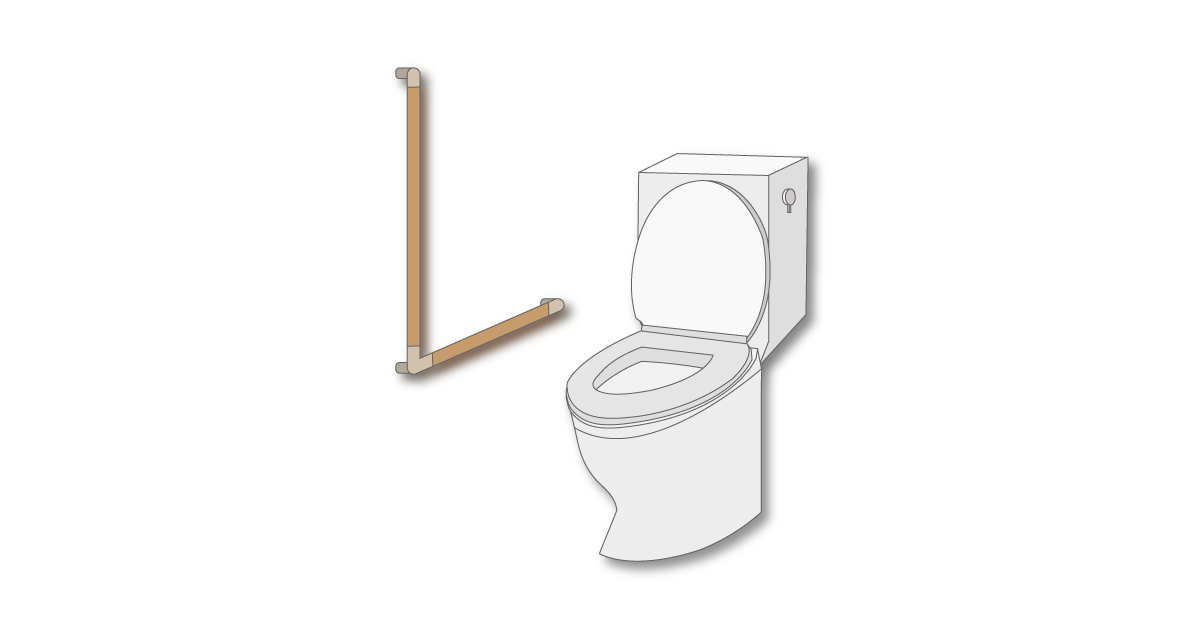
Handrails improve safety when standing or moving. They may also be installed along the route from the room to the toilet.
Removing level differences
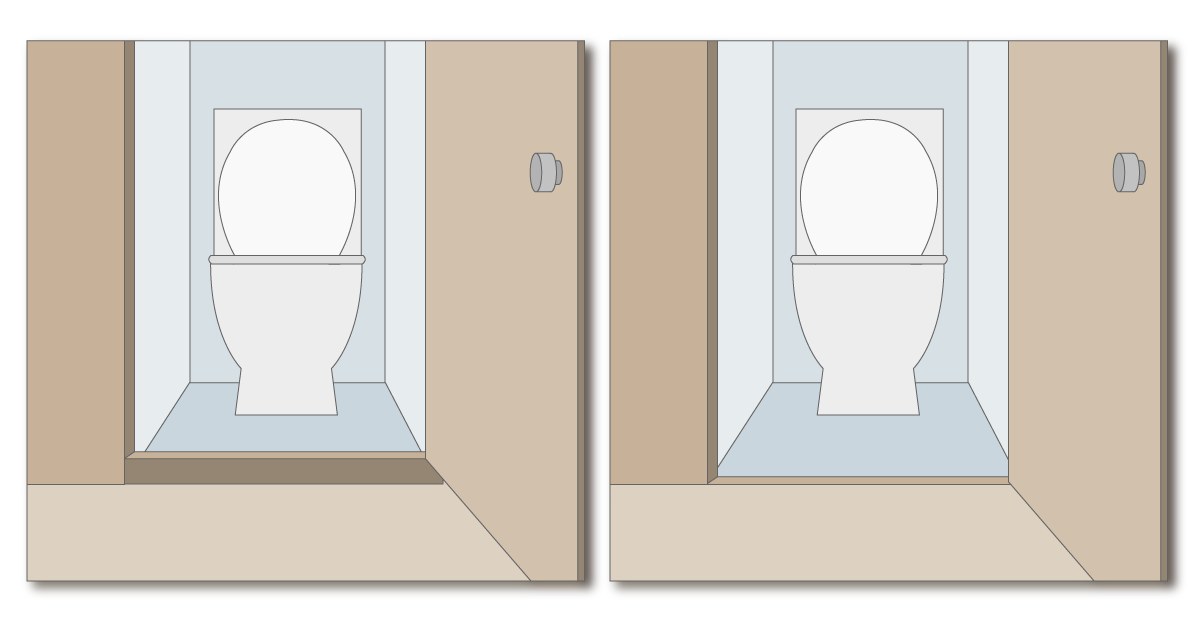
Remove the threshold if it creates a trip hazard or obstructs wheelchair access. Raising the floor can also eliminate a level difference. A ramp may be used if fixed in place through construction work.
Changing flooring or pathway materials to prevent slipping and make movement easier
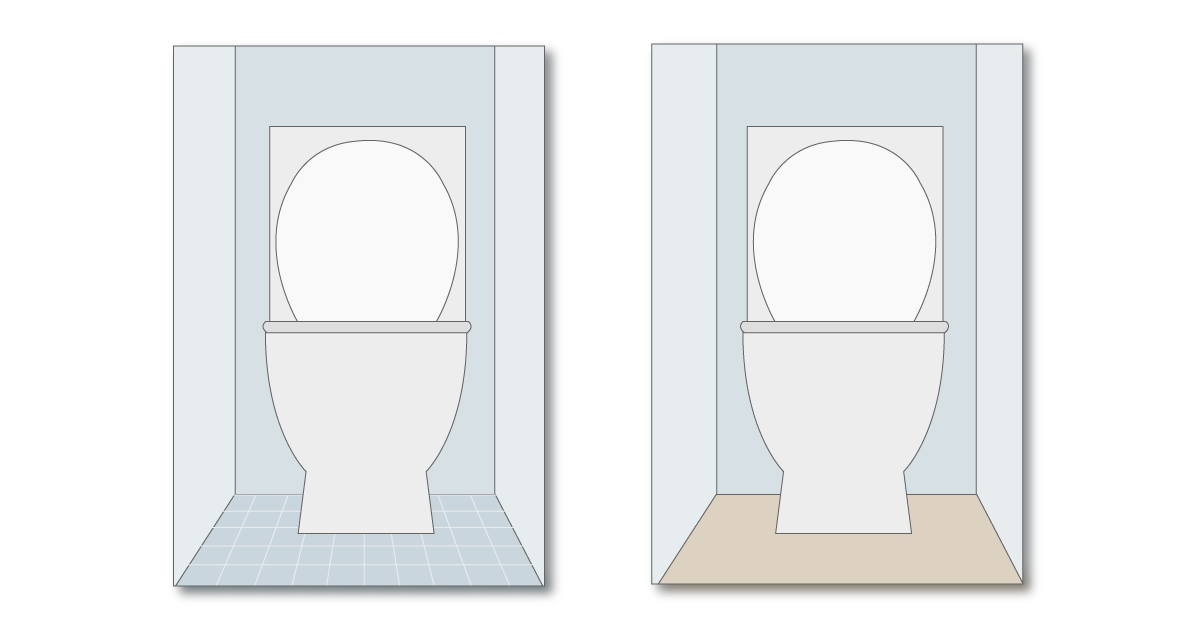
Replace tile flooring with a less slippery material.
Replacing doors with sliding doors or similar designs
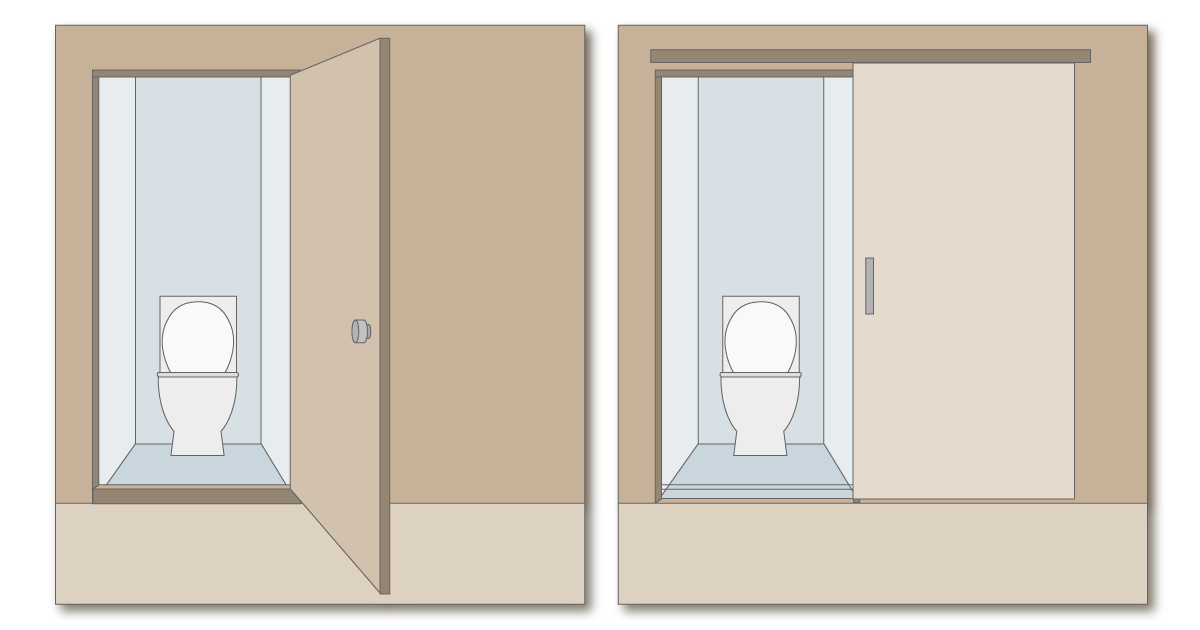
Replace a hinged door with a sliding or folding door. An outward-opening door can cause loss of balance backward. An inward-opening door can make rescue difficult if someone falls inside. Changing the opening direction or replacing a doorknob with a lever handle is also possible.
Replacing toilet bowls with Western-style seated toilets
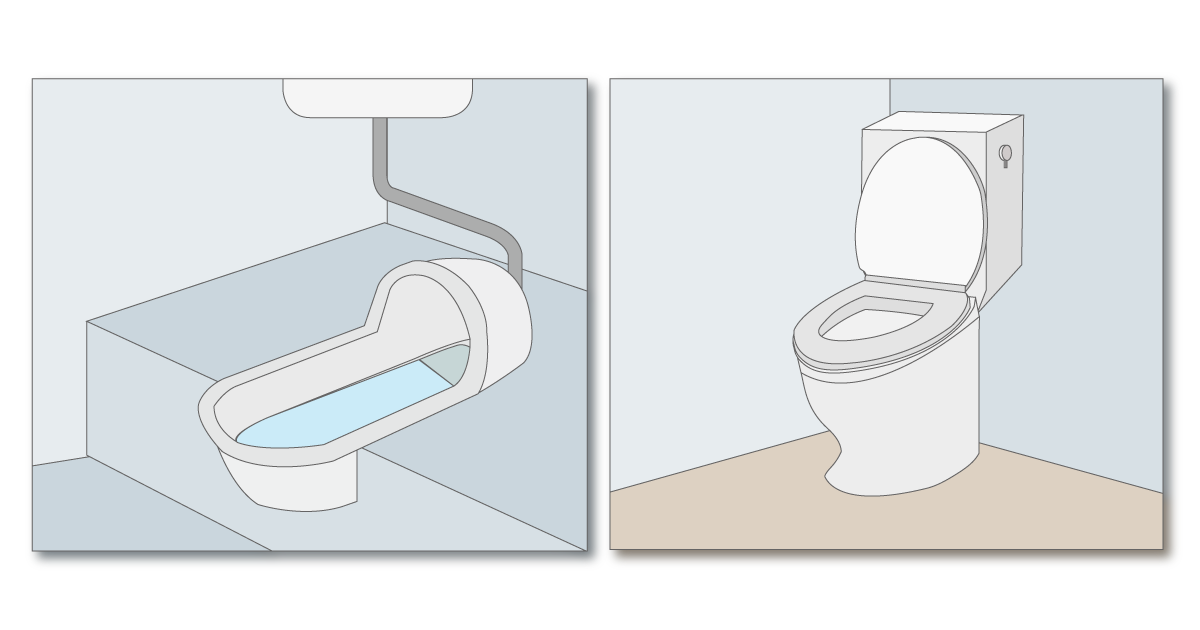
Deep squatting over a Japanese-style toilet can be difficult for some people. Replacing it with a Western-style seated toilet may make sitting and standing easier. However, some people find bowel movements easier in a squatting posture. When replacing the toilet, check the seated defecation posture as well as ease of sitting and standing.
 Posture for Easier Bowel Movements: Toilet Sitting and Support Equipment [2026 Guide]
Home modifications: Precautions
In principle, an application must be made before work begins. An application made after completing work will not be accepted. In unavoidable circumstances, a post-work application may be permitted; consult the municipality if advance application is difficult.
In principle, eligible home modification costs are capped at a cumulative ¥200,000 per person. The allowance may be used across multiple projects within this limit. The out-of-pocket share is 10–30% depending on income. For ¥200,000 of eligible work, this is ¥20,000 at 10%, ¥40,000 at 20% or ¥60,000 at 30%. A new limit may be set after moving home or when the degree of care need rises by at least three stages according to the prescribed criteria.
Advance application approval takes time, so the work cannot be completed immediately. Consult early so the modifications can be available when needed.

Home modification coverage extends beyond the toilet. It is important to adapt the home as a whole, including the entrance for going out and the route to the toilet.